
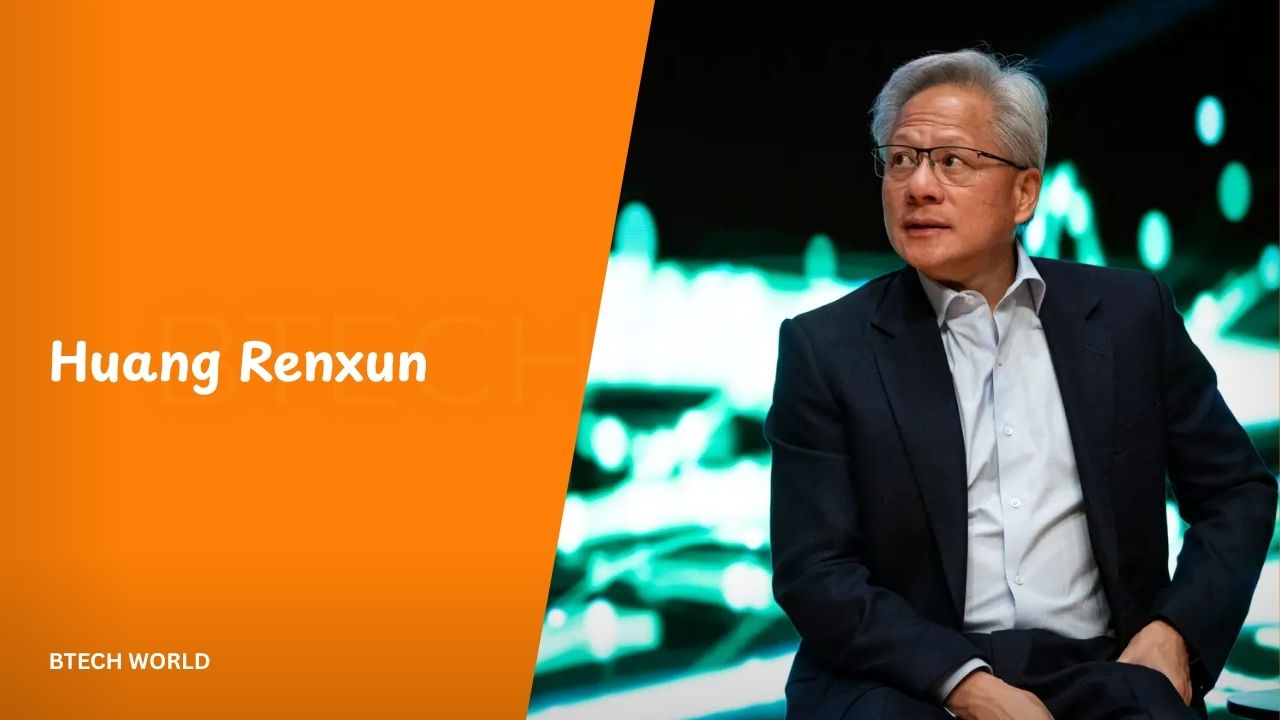
Jensen Huang Biography, Career, NVIDIA, Net Worth, and Achievements

Jensen Huang is one of the most influential figures in modern technology and the co-founder, president, and CEO of NVIDIA. Since helping establish NVIDIA in 1993, Huang has led the company from a graphics-chip startup into a major force in accelerated computing and artificial intelligence. NVIDIA’s GPUs first transformed computer graphics and gaming and later became central to the development and deployment of modern AI systems.
Born in Taiwan in 1963, Huang moved to the United States as a child and eventually studied electrical engineering at Oregon State University before earning a master’s degree from Stanford University. Before starting NVIDIA, he worked at AMD and LSI Logic, gaining experience in semiconductor engineering that would later influence his approach to building NVIDIA.
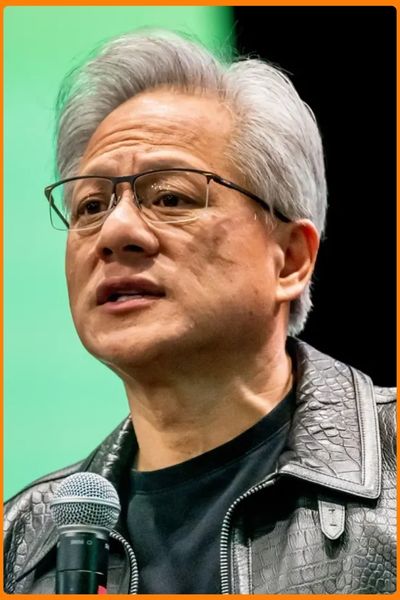
Who Is Jensen Huang?
Jensen Huang, whose Chinese name is Huang Renxun, is a Taiwanese-born American technology executive and electrical engineer. He has served as NVIDIA’s president and CEO since the company was founded, making him one of the longest-serving leaders of a major technology company. NVIDIA identifies him as its founder and CEO, while its corporate history records Huang, Chris Malachowsky, and Curtis Priem as the company’s founders in 1993.
Huang’s importance in the technology industry grew alongside NVIDIA’s evolution. The company initially focused on 3D graphics for PCs and games, but its GPU architecture eventually became useful for highly parallel workloads beyond graphics. NVIDIA’s 1999 GPU milestone, followed by CUDA in 2006 and the company’s work in deep learning, helped create the technological foundation for its later position in AI computing.
Unlike many technology executives who entered leadership after spending years inside established companies, Huang has remained closely associated with NVIDIA from its earliest days. His long tenure has allowed him to guide the company through changing markets, failed products, competitive pressure, semiconductor cycles, gaming growth, data-center expansion, and the rise of generative AI.
Jensen Huang Early Life and Education
Jensen Huang was born in Taiwan in 1963. During his childhood, his family moved to Thailand, and later he and his brother were sent to the United States. The move exposed Huang to a new educational and cultural environment at a relatively young age. The Computer History Museum notes that he immigrated to the United States when he was nine.
His early experiences in the United States played an important role in shaping his education and eventual career. Huang attended school in the United States and developed an interest in technology and engineering. He later studied electrical engineering at Oregon State University, earning a bachelor’s degree, and continued his education at Stanford University, where he earned a master’s degree in electrical engineering.
Huang’s educational background is particularly relevant to his career because NVIDIA is fundamentally a semiconductor and computing company. His engineering training gave him technical knowledge that he could combine with business strategy and product vision.
Jensen Huang Before NVIDIA
Before founding NVIDIA, Jensen Huang worked in the semiconductor industry. According to NVIDIA, he worked at Advanced Micro Devices (AMD) and LSI Logic before launching his own company. NVIDIA records his time at AMD from 1984 to 1985 and at LSI Logic from 1985 to 1993.
These positions helped Huang understand the semiconductor business from an engineering and product-development perspective. The experience was valuable when he and his co-founders decided to build a new company focused on graphics technology.
Starting a semiconductor company was a major challenge because chip development requires substantial investment in research, engineering, manufacturing relationships, software, and distribution. Huang nevertheless pursued the opportunity with Chris Malachowsky and Curtis Priem, eventually creating NVIDIA in April 1993.
The Founding of NVIDIA
In 1993, Jensen Huang, Chris Malachowsky, and Curtis Priem founded NVIDIA with a vision centered on 3D graphics for gaming and multimedia. At the time, the graphics-chip market was highly competitive, with numerous companies pursuing different approaches to computer graphics.
NVIDIA initially concentrated on graphics acceleration, but the company’s long-term opportunity became much larger. In 1995, NVIDIA introduced its first product, the NV1. The company later developed increasingly powerful graphics processors that helped establish NVIDIA as an important name in PC graphics.
One of the defining milestones came in 1999, when NVIDIA introduced the GeForce 256, which NVIDIA and the Computer History Museum describe as the first GPU. The GPU concept eventually became far more important than gaming alone, because the same parallel-processing capabilities could be applied to scientific computing and machine learning.
Jensen Huang and NVIDIA’s Rise
NVIDIA’s development did not happen overnight. The company experienced difficult periods and intense competition, but Huang maintained a long-term focus on graphics processors and accelerated computing.
A particularly important step came in 2006, when NVIDIA introduced the CUDA architecture. CUDA allowed developers to use NVIDIA GPUs for general-purpose parallel computing, opening the door to applications outside traditional graphics.
That strategy eventually became critical to artificial intelligence. Neural-network workloads can benefit from highly parallel computation, making GPUs particularly useful for training and running machine-learning models.
NVIDIA identifies 2012, when the AlexNet neural network demonstrated the power of GPU-based deep learning, as another major turning point in the company’s history. The development helped connect NVIDIA’s hardware and software ecosystem with the emerging AI revolution.
Jensen Huang’s Role in the AI Revolution
Today, Jensen Huang is strongly associated with the global AI boom because NVIDIA supplies much of the computing infrastructure used to develop and deploy advanced AI systems.
Modern AI models require enormous amounts of computing power. NVIDIA’s GPUs, networking products, software platforms, and data-center systems have become important components of that infrastructure. The company has expanded beyond selling individual graphics cards into providing complete accelerated-computing platforms for data centers and AI developers.
Huang has consistently promoted the idea of accelerated computing, where specialized processors work alongside CPUs to handle demanding workloads. This approach has become increasingly important for artificial intelligence, scientific computing, simulation, robotics, and other computationally intensive applications.
His leadership has therefore been about more than producing faster GPUs. NVIDIA has built an ecosystem around hardware, software, developer tools, networking, and AI infrastructure.
Jensen Huang’s Leadership Style
Jensen Huang has developed a distinctive public image as a technology leader. He is frequently recognized by his trademark black leather jacket, but his influence extends far beyond his appearance.
His leadership approach emphasizes long-term technological shifts rather than short-term product cycles. NVIDIA invested heavily in GPU computing and CUDA years before generative AI became mainstream. That earlier investment positioned the company to benefit when deep learning and large-scale AI workloads expanded.
Huang also frequently discusses the importance of adapting to major changes in computing. Under his leadership, NVIDIA moved from being primarily recognized as a gaming graphics company toward becoming a broad accelerated-computing and AI platform company.
This transformation is one of the central reasons Jensen Huang’s career has become a major subject of interest among technology professionals, investors, entrepreneurs, and AI researchers.
Jensen Huang as NVIDIA CEO
Jensen Huang has served as NVIDIA’s president and CEO since the company’s founding in 1993. NVIDIA also lists him as a member of its board of directors.
His unusually long tenure gives him a unique perspective on the semiconductor industry. He has led NVIDIA through several different technological eras, including PC graphics, gaming GPUs, professional visualization, scientific computing, cloud computing, deep learning, and generative AI.
During this period, NVIDIA also developed products and technologies such as RTX graphics, CUDA, Omniverse, data-center accelerators, and AI platforms. NVIDIA’s corporate timeline highlights CUDA in 2006, deep-learning developments in 2012, RTX in 2018, and Omniverse in 2022 as major milestones.
Jensen Huang Net Worth
Jensen Huang net worth is closely linked to his ownership of NVIDIA stock, so it can change substantially as the company’s share price moves.
Forbes’ real-time profile listed Huang at approximately $195.6 billion as of September 8, 2026, ranking him among the world’s richest people. Forbes also reports that Huang owns approximately 3% of NVIDIA.
His wealth has risen dramatically alongside NVIDIA’s market value during the AI boom. In May 2026, Forbes reported that his fortune briefly moved above $200 billion as NVIDIA shares gained.
Because most of Huang’s fortune is connected to equity ownership, his net worth should not be interpreted as cash in a bank account. Billionaire wealth estimates fluctuate based on stock-market prices and changes in reported holdings.
For readers searching for Jensen Huang net worth 2026, it is therefore better to cite a specific date alongside the figure rather than presenting one number as permanent.
Jensen Huang’s Major Achievements
Jensen Huang has received numerous awards and honors throughout his career. NVIDIA says he has been elected to the National Academy of Engineering and has received the Robert N. Noyce Award, the IEEE Founder’s Medal, and the Dr. Morris Chang Exemplary Leadership Award, among other honors.
His recognition has also come from the business and technology communities. NVIDIA notes that Huang has been named the world’s best CEO by organizations including Fortune, The Economist, and Brand Finance, and that TIME has recognized him among its influential figures.
His influence is largely tied to NVIDIA’s transformation. The company’s technology helped redefine computer graphics, expand GPU-based computing, and accelerate the development of modern AI.
Jensen Huang and the President’s Council on Science and Technology
In March 2026, Jensen Huang was appointed to the President’s Council of Advisors on Science and Technology (PCAST). The White House announced the appointment on March 25, 2026, as part of the first group of members selected for the council.
PCAST provides advice on science and technology issues and is intended to help strengthen U.S. leadership in those areas. Huang’s appointment reflects the growing importance of semiconductor technology, computing infrastructure, and AI in national technology policy.
NVIDIA’s Hugging Face Acquisition Under Jensen Huang
One of the most recent major developments connected to Huang came in September 2026, when NVIDIA announced an agreement to acquire Hugging Face for approximately $12.93 billion.
Hugging Face is a major platform for AI models, datasets, and developer tools. NVIDIA said the acquisition would help scale Hugging Face’s platform, strengthen its infrastructure, and expand access to AI for developers and institutions.
The deal illustrates how NVIDIA’s strategy is expanding beyond hardware. AI development increasingly depends on models, software, developer communities, infrastructure, and cloud services. Bringing Hugging Face into NVIDIA’s ecosystem could therefore strengthen the company’s position across several parts of the AI technology stack. Reuters also reported that Hugging Face would remain open and interoperable according to Huang’s comments about the deal.
Jensen Huang’s Philanthropy
Huang has also contributed to universities and educational institutions.
Forbes reports that Huang gave $30 million to Stanford University for an engineering center and $50 million to Oregon State University in 2022 for a research center named in his honor.
These contributions reflect his connection to engineering education and research. Both Stanford and Oregon State played important roles in his own technical education, making university support a notable part of his philanthropic activities.
Why Is Jensen Huang Important to Technology?
Jensen Huang’s significance comes from the fact that his career spans multiple generations of computing technology. He began in the era when personal computers and 3D graphics were rapidly developing, then helped make GPUs important for gaming and visual computing.
The bigger transformation came when GPUs became general-purpose accelerators. CUDA created a software ecosystem around NVIDIA hardware, and the growth of deep learning demonstrated how powerful GPU computing could be for AI.
Today, NVIDIA’s technology sits behind a large portion of the infrastructure supporting AI development. Huang’s decisions over decades helped position the company for this transformation.
In that sense, his story is not simply about becoming the CEO of a successful chip company. It is about identifying a computing architecture early, investing in an ecosystem around it, and remaining committed to that strategy long enough for the market to catch up.
What Can We Learn From Jensen Huang’s Career?
There are several broader lessons in Jensen Huang’s career. The first is the value of long-term thinking. NVIDIA invested in GPU computing and CUDA before today’s generative-AI market existed.
The second is the importance of building an ecosystem. NVIDIA did not rely only on hardware performance; CUDA, developer tools, networking, software, and broader platforms helped make its products useful to researchers and developers.
The third lesson is adaptability. NVIDIA began with graphics but expanded into data centers, scientific computing, AI, robotics, automotive technology, and other markets.
Finally, Huang’s career demonstrates the value of combining technical knowledge with business leadership. His electrical-engineering education helped him understand the technology, while his decades as CEO gave him the opportunity to shape NVIDIA’s overall strategy.
Final Thoughts on Jensen Huang
The story of Jensen Huang is closely connected to the transformation of modern computing. From his early education in Taiwan and the United States to his engineering work at AMD and LSI Logic, every stage of his career contributed to the experience he later brought to NVIDIA.
Since founding NVIDIA in 1993, Huang has overseen the company’s evolution from a graphics-focused startup into a major platform for accelerated computing and AI. NVIDIA’s development of GPUs, CUDA, and AI infrastructure helped create a technology ecosystem that is now deeply connected to the growth of machine learning and generative AI.
His current influence extends beyond NVIDIA’s products. His appointment to PCAST in 2026 and NVIDIA’s proposed acquisition of Hugging Face demonstrate how central AI, computing infrastructure, and developer ecosystems have become to his broader technology strategy.
For technology enthusiasts, entrepreneurs, and aspiring engineers, Huang’s career offers an important example of how technical expertise, long-term investment, and strategic leadership can combine to change an entire industry.
Frequently Asked Questions
Who is Jensen Huang?
Jensen Huang is the founder, president, and CEO of NVIDIA. He co-founded the company in 1993 with Chris Malachowsky and Curtis Priem and has led it since its creation.
How old is Jensen Huang?
Jensen Huang was born in 1963 and is 63 years old in 2026.
Where was Jensen Huang born?
Huang was born in Taiwan. The Computer History Museum identifies him as being born in Taiwan in 1963.
What did Jensen Huang study?
He earned a bachelor’s degree in electrical engineering from Oregon State University and a master’s degree in electrical engineering from Stanford University.
When did Jensen Huang found NVIDIA?
Jensen Huang co-founded NVIDIA in 1993 with Chris Malachowsky and Curtis Priem. NVIDIA’s corporate timeline gives April 5, 1993, as the company’s founding date.
What is Jensen Huang’s net worth?
Forbes’ real-time profile listed his net worth at about $195.6 billion as of September 8, 2026. Because his wealth is heavily connected to NVIDIA’s stock price, the figure can change from day to day.
Why is Jensen Huang famous?
Huang is best known for co-founding NVIDIA and leading the company from a graphics-chip business into a major accelerated-computing and artificial-intelligence company.
Explore More: BTECH WORLD