
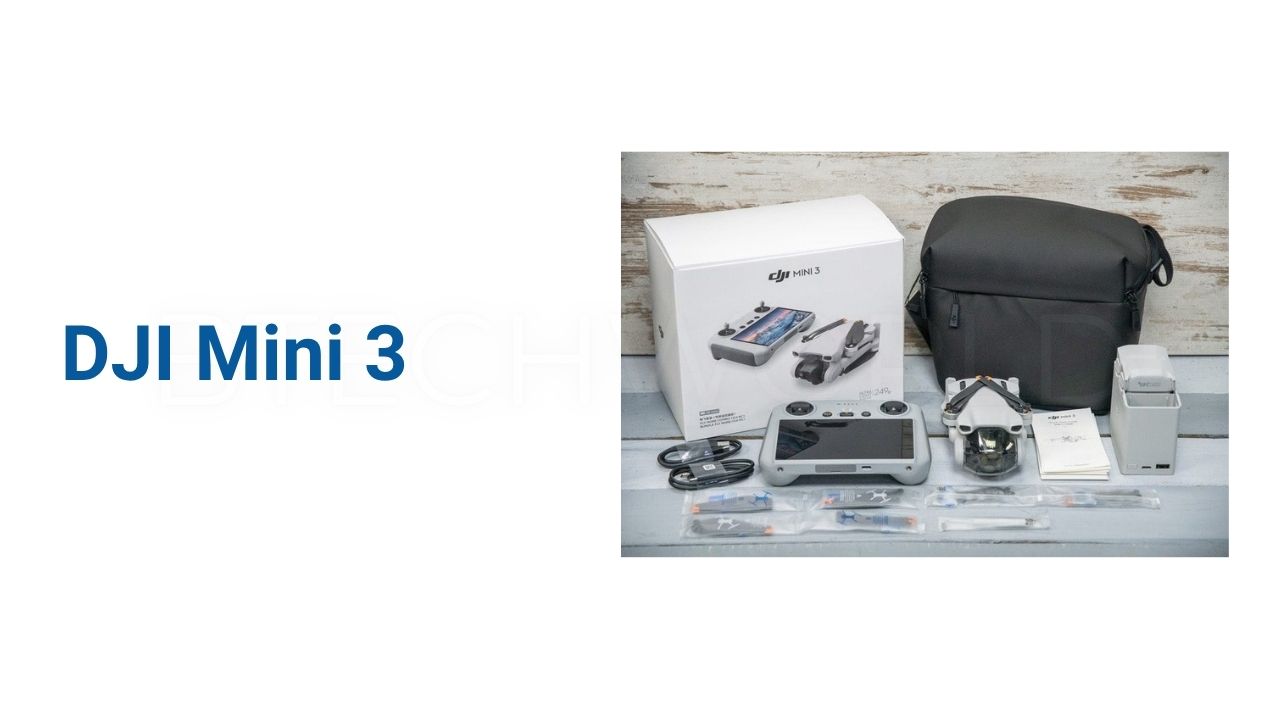
DJI Mini 3: Features, Price, Camera, Battery, and Everything to Know

The DJI Mini 3 is a compact camera drone designed for travelers, content creators, beginners, and anyone who wants strong aerial footage without carrying a large aircraft. Its lightweight body, 4K HDR video, vertical shooting capability, and long battery options make it a practical choice for everyday aerial photography. DJI lists the standard aircraft weight at 248 grams, while the optional Intelligent Flight Battery Plus can extend the maximum flight time to 51 minutes.
Although the Mini 3 is not the newest or most advanced drone in DJI’s lineup, its combination of portability, image quality, and battery life still makes it worth considering. Here is everything you need to know about its design, camera, battery, features, performance, and price.
What Is the DJI Mini 3?
The DJI Mini 3 is a lightweight folding camera drone from DJI’s Mini series. It is built around portability while still offering a capable imaging system.
The drone weighs 248 grams with the standard battery, propellers, and a microSD card under DJI’s stated measurement conditions. Its folded dimensions are 148 × 90 × 62 mm, making it easy to carry in a small bag. When unfolded, it measures 251 × 362 × 72 mm.
Its lightweight design is one of its biggest advantages. However, drone regulations differ by country, so users should always check local requirements before flying.
DJI Mini 3 Camera
The camera is one of the strongest parts of the DJI Mini 3. It uses a 1/1.3-inch CMOS sensor with 48MP effective pixels and a lens with an f/1.7 aperture.
The camera can capture 12MP and 48MP still images. It also supports JPEG and DNG RAW formats, which gives photographers more flexibility during editing. The maximum photo resolution is 8064 × 6048 pixels.
For video, the DJI Mini 3 can record 4K footage at 24, 25, or 30 frames per second. It also supports 2.7K and Full HD recording at higher frame rates. DJI lists a maximum video bitrate of 100 Mbps.
4K HDR Video Quality
The DJI Mini 3 supports 4K HDR video, making it suitable for travel videos, social-media content, landscapes, and everyday aerial filming.
DJI states that 4K/30fps can provide a balance between dynamic range and image detail. Users who want smoother footage can select 48, 50, or 60fps at lower resolutions, although DJI notes that dynamic range changes at those frame rates.
The drone also uses dual native ISO technology. According to DJI, its native ISO values are 100 and 800. This helps the camera handle different lighting conditions more effectively.
True Vertical Shooting
One feature that makes the Mini 3 particularly useful for social-media creators is True Vertical Shooting.
The gimbal can rotate the camera into a vertical orientation, allowing users to create portrait-style footage without simply cropping a horizontal video. This is useful for platforms where vertical video is the preferred format.
The gimbal is a three-axis mechanical system that stabilizes tilt, roll, and pan. DJI also designed it for a wider range of movement, giving creators more flexibility when framing shots.
DJI Mini 3 Battery Life
Battery life is another major selling point.
With the standard Intelligent Flight Battery, DJI rates the Mini 3 for up to 38 minutes of flight time. With the optional Intelligent Flight Battery Plus, the maximum rated flight time rises to 51 minutes. These figures come from controlled testing, so real-world results can vary with wind, temperature, flying style, and other conditions.
The standard battery has a 2453mAh capacity, while the Plus battery has a 3850mAh capacity. The Plus battery also increases the aircraft’s weight to about 290 grams, so users should consider local drone regulations when using it.
DJI Mini 3 Flight Performance
The Mini 3 can reach a maximum horizontal speed of 16 m/s under DJI’s specified testing conditions. It has a stated Level 5 wind-resistance rating, with maximum wind-speed resistance listed at 10.7 m/s.
The drone uses GPS, GLONASS, and Galileo satellite positioning. DJI also lists a downward vision system for positioning and hovering assistance.
Because the Mini 3 is lightweight, strong winds can still affect its movement. Pilots should therefore pay attention to weather conditions and avoid treating laboratory specifications as guaranteed real-world performance.
Intelligent Features and QuickShots
The DJI Mini 3 includes several automated shooting modes that can make aerial content easier to create.
Its QuickShots options include Dronie, Helix, Rocket, Circle, and Boomerang. These modes allow the drone to perform predefined flight movements while capturing footage.
The drone also supports panorama modes, including Sphere, 180°, and Wide Angle. These features can help users create different types of aerial images without manually controlling every movement.
DJI Mini 3 Transmission Range
The Mini 3 uses DJI’s O2 transmission system. DJI lists a maximum transmission distance of 10 km under FCC standards in unobstructed conditions without interference.
That figure should not be interpreted as a guaranteed practical distance. Buildings, trees, wireless interference, local regulations, and the environment can significantly affect transmission performance. DJI itself notes that actual conditions can produce different results.
DJI Mini 3 Storage and Connectivity
The drone does not have built-in internal storage, so users need a compatible microSD card for recording footage.
DJI recommends several V30-rated microSD cards from brands such as SanDisk, Kingston, and Samsung. Cards should meet the required speed and capacity specifications for reliable recording.
The Mini 3 works with DJI’s compatible remote-control options, including the DJI RC-N1. Users should check compatibility before purchasing a controller or accessory separately.
DJI Mini 3 Price
The price of the DJI Mini 3 depends on the package, retailer, region, controller, battery configuration, and current promotions.
DJI’s current store information lists the Mini 3 at $719 for a listed configuration, although prices can change and different packages may have different contents.
Because the Mini 3 is an older model compared with newer DJI releases, buyers may also find regional discounts or bundle offers. It is worth comparing the included controller, number of batteries, charging accessories, and warranty rather than judging a package only by its headline price.
DJI Mini 3 vs Mini 3 Pro
The Mini 3 and Mini 3 Pro share the same general lightweight design philosophy, but they are not identical.
The Mini 3 focuses on essential aerial photography and video features. The Mini 3 Pro adds more advanced capabilities, including higher video frame-rate options, additional sensing systems, and a broader feature set.
For casual users, travelers, and beginners, the Mini 3 can provide plenty of capability without paying for every advanced feature. Users who need more sophisticated obstacle sensing and professional-oriented controls may find the Mini 3 Pro more suitable.
Who Should Buy the DJI Mini 3?
The DJI Mini 3 is a strong option for people who prioritize portability and straightforward aerial photography.
Travelers can benefit from its small folded size. Social-media creators can use True Vertical Shooting for portrait-oriented content. Beginners may appreciate its relatively simple approach compared with larger professional drones.
It is also suitable for people who want 4K video and a good camera without moving into the larger and more expensive DJI drone categories.
Who Should Consider Another Drone?
The Mini 3 may not be ideal for every pilot.
Users who need advanced obstacle sensing, more professional video controls, or specialized camera systems may want a higher-end DJI model. Similarly, people who regularly fly in challenging weather should carefully consider the limitations of a lightweight drone.
The Mini 3 is best understood as a portable camera drone rather than a replacement for DJI’s professional aircraft.
Conclusion
The DJI Mini 3 offers a strong combination of portability, camera quality, battery life, and easy-to-use aerial features. Its 1/1.3-inch 48MP sensor, 4K HDR video, three-axis gimbal, and True Vertical Shooting make it capable of producing impressive content from a compact aircraft.
Its standard battery provides up to 38 minutes of rated flight time, while the optional Battery Plus can extend that figure to 51 minutes under DJI’s testing conditions.
For travelers, beginners, and social-media creators, the Mini 3 remains an attractive compact drone. The key is to choose the right package, understand its limitations, and follow local drone regulations before every flight.
Frequently Asked Questions
Is the DJI Mini 3 good for beginners?
Yes. Its compact design, automated shooting modes, stable gimbal, and straightforward camera system make it a suitable option for beginners.
Does the DJI Mini 3 record 4K video?
Yes. The Mini 3 supports 4K video recording at 24, 25, and 30fps. It also supports 4K HDR recording.
How long can the DJI Mini 3 fly?
The standard Intelligent Flight Battery provides a rated maximum of 38 minutes. The optional Intelligent Flight Battery Plus increases the rated maximum to 51 minutes.
Does DJI Mini 3 have a 48MP camera?
Yes. Its 1/1.3-inch CMOS sensor has 48MP effective pixels and supports 48MP photography.
Is DJI Mini 3 under 249 grams?
With the standard Intelligent Flight Battery, DJI lists the aircraft at 248 grams. The optional Battery Plus increases the weight to about 290 grams, so local regulations should be checked before flying.
Explore More: BTECH WORLD