
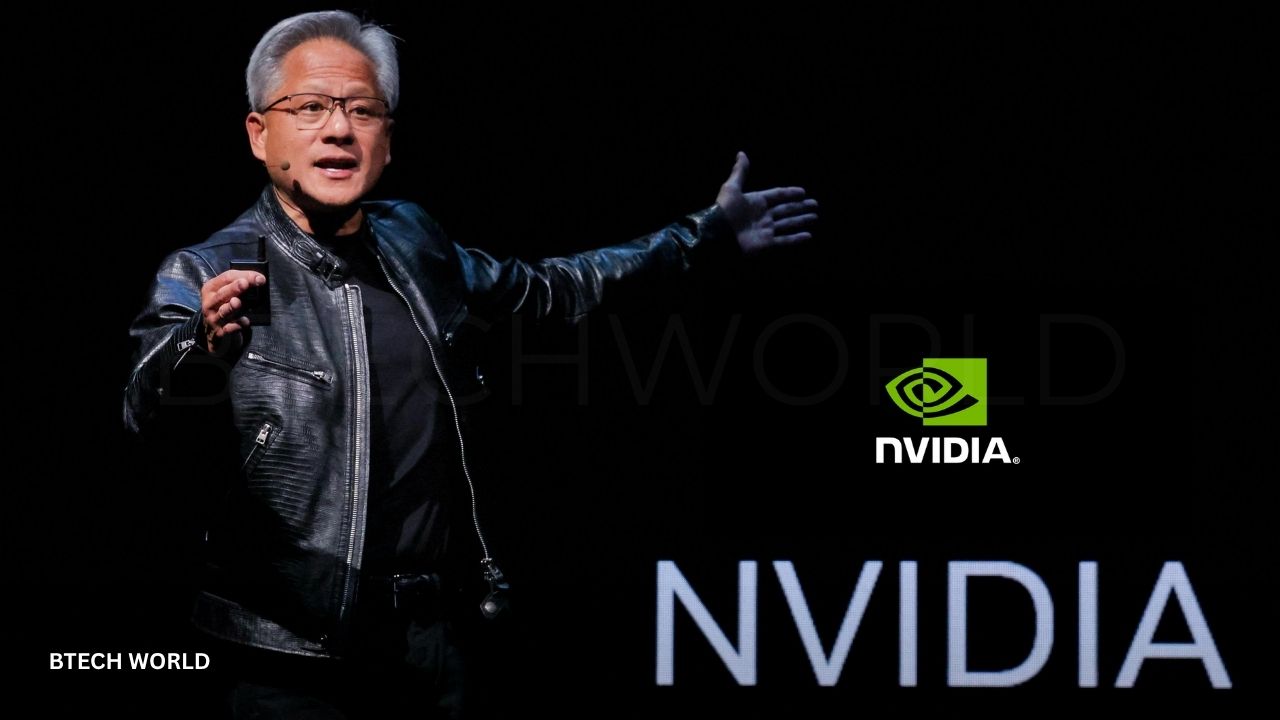
Nvidia News Today Latest Updates on AI and Graphics Technology

Nvidia news today is dominated by artificial intelligence, next-generation computing, local AI, and increasingly sophisticated graphics technology. The company is expanding far beyond traditional graphics processors as demand for AI infrastructure continues to reshape the technology industry. Nvidia recently reported $96.2 billion in quarterly revenue, while its data center business reached $89 billion, showing just how strongly AI workloads are driving the company.
The latest developments include the planned acquisition of Hugging Face, continued expansion of the Vera Rubin platform, new local-AI products, DLSS 5 graphics technology, and partnerships designed to push AI from large data centers toward PCs, edge devices, cybersecurity, and other industries. Here is a closer look at the most important Nvidia developments right now.
Why Nvidia News Matters in 2026
Nvidia has become one of the most important companies in the AI computing industry because its GPUs provide much of the processing power required to train and operate modern AI models. Its influence now stretches across data centers, cloud computing, gaming, robotics, professional visualization, networking, and AI software.
The scale of that business is visible in Nvidia’s latest financial results. For the quarter ended July 26, 2026, Nvidia reported $96.2 billion in revenue, up 106% from a year earlier. Data center revenue climbed 117% year over year to $89 billion. Nvidia also forecast $108 billion in revenue for the following quarter.
Nvidia’s Latest AI Developments
One of the biggest changes in Nvidia’s strategy is its increasing focus on AI systems rather than individual chips. The company is building complete computing platforms that combine GPUs, CPUs, networking, storage, software, and interconnect technology.
Nvidia’s Vera Rubin platform is central to this strategy. The platform combines the Vera CPU and Rubin GPU with networking and other components designed for large-scale AI factories. Nvidia says Vera Rubin can deliver up to 10 times the agent throughput of its previous-generation Grace Blackwell platform at scale.
Nvidia’s New GPU and Graphics Technology
Nvidia’s graphics business remains important even as AI becomes its largest growth engine. The company’s latest technologies use AI not only for training models but also for rendering images, improving game performance, and creating more realistic digital environments.
The latest generation of AI-powered graphics is particularly visible through DLSS 5. Nvidia has positioned the technology as a major step toward neural rendering, where AI helps generate visual detail and improve image quality instead of relying entirely on traditional rendering techniques.
Nvidia’s AI Data Center Business
Data centers are now the heart of Nvidia’s business. The company’s latest quarterly results show that its data center operation generated $89 billion in revenue, representing a 117% year-over-year increase. Blackwell Ultra infrastructure was a major driver of that growth.
Demand is coming from hyperscale cloud providers, AI laboratories, enterprises, and organizations building their own AI infrastructure. Nvidia has also expanded its relationships with major cloud companies, including an agreement with Amazon Web Services involving additional GPU deployments.
Nvidia and the Rise of Agentic AI
Agentic AI is becoming an important theme in Nvidia’s product strategy. Unlike conventional chatbots that mainly respond to prompts, AI agents can plan tasks, use tools, interact with software, process information, and perform multiple steps before producing an answer.
Nvidia designed the Vera CPU specifically for this emerging workload. The company says Vera is intended for agentic AI, reinforcement learning, data processing, and other workloads where CPUs and GPUs must work together efficiently. Nvidia has also described the Vera Rubin platform as infrastructure for the next generation of AI factories.
Nvidia’s Latest Partnerships and Industry Deals
Nvidia is increasingly building an ecosystem around its AI hardware rather than relying solely on direct chip sales. Its partnerships cover cloud computing, networking, software, cybersecurity, automotive technology, and local AI.
In late August, Nvidia and MediaTek announced a deeper collaboration covering AI infrastructure, local AI computing, and automotive applications. Nvidia has also been working with companies across the server industry to bring Vera Rubin systems into production.
These partnerships matter because future AI systems will require more than powerful GPUs. They will need efficient networking, memory, storage, software, CPUs, and specialized systems capable of operating at enormous scale.
Nvidia’s Hugging Face Acquisition and AI Strategy
One of the most significant recent Nvidia news stories is its agreement to acquire Hugging Face for approximately $12.93 billion. Hugging Face is a major platform for AI models, datasets, applications, and developer tools.
The acquisition gives Nvidia a much stronger position in the open-source AI ecosystem. Reuters reported that Nvidia intends to keep Hugging Face open and interoperable, while using the combination to expand Nvidia’s role beyond hardware.
Hugging Face has become an important meeting point for AI developers and organizations experimenting with open models. For Nvidia, the acquisition could help connect its computing infrastructure with the developers actually building and deploying those models.
Nvidia RTX Spark and Local AI PCs
Another important trend is the move toward local AI. Nvidia announced new RTX Spark Windows PCs at IFA 2026, targeting AI enthusiasts, developers, and creators who want to run capable AI workloads locally rather than sending every task to a cloud service.
Nvidia says new software optimizations can deliver up to 1.9 times faster local inference in supported workloads. Its NVIDIA PAIR technology can also distribute AI inference across multiple RTX PCs connected to the same local network.
The shift toward local AI could become increasingly important as users seek faster responses, greater privacy, and reduced dependence on remote cloud infrastructure.
Nvidia’s Latest Gaming and GeForce Updates
Gaming remains a major part of Nvidia’s identity, even though the company’s data center business now dominates its financial performance. GeForce RTX graphics cards continue to use AI-based technologies to improve gaming performance and visual quality.
Nvidia’s September updates also include new GeForce NOW games. The company’s latest announcements highlight NBA 2K27 and DLSS 5 among the games coming to its cloud gaming service.
For gamers, the significance of these developments is that Nvidia is increasingly treating AI as a fundamental component of graphics technology rather than an optional feature.
DLSS and the Future of AI-Powered Graphics
DLSS has become one of Nvidia’s most recognizable gaming technologies. It uses machine learning to reconstruct and enhance rendered images, allowing games to achieve higher visual quality and performance than traditional rendering alone might provide.
DLSS 5 takes the concept further with AI-powered 3D-guided neural rendering. Nvidia is using the technology to bring more sophisticated visual effects into games while reducing the amount of conventional rendering work developers need to perform.
Recent reporting also indicates that Nvidia plans to extend DLSS 5 beyond RTX 50-series graphics cards to RTX 40-series GPUs after optimization. Support for older RTX generations remains less certain.
Nvidia Vera Rubin and Next-Generation AI Computing
Vera Rubin represents Nvidia’s next major platform after Blackwell. Instead of treating the GPU as an isolated component, Nvidia is designing an entire computing architecture around the demands of large-scale AI.
The Rubin GPU architecture includes 336 billion transistors, 288GB of HBM4 memory and up to 22TB/s of memory bandwidth. Nvidia says the architecture is designed particularly for agentic AI workloads involving repeated reasoning and inference.
Nvidia has also said Vera Rubin is entering full production, with manufacturers and supply-chain partners preparing systems for AI labs, cloud providers, and hyperscalers.
Nvidia’s Role in AI Infrastructure
Modern AI requires enormous computing infrastructure. Training and running advanced models can involve thousands or even hundreds of thousands of processors working together.
That is why Nvidia’s strategy increasingly focuses on complete AI factories. Its platforms combine GPUs with CPUs, networking, storage, software, and high-speed interconnects. This approach allows Nvidia to capture more value from each AI deployment while giving customers an integrated infrastructure stack.
The company’s latest financial results demonstrate how strong this market currently is. Nvidia’s quarterly revenue more than doubled year over year, while its data center business accounted for the overwhelming majority of sales.
Nvidia and the Growing AI Chip Competition
Nvidia’s dominance does not mean competition has disappeared. AMD, Google, Amazon, Microsoft, Qualcomm, and other companies are developing alternative AI accelerators and custom silicon.
China is another important competitive front. Reuters recently reported that Chinese AI chip companies including Enflame, Moore Threads, MetaX, and Biren are expanding their capabilities as China seeks greater independence from U.S. technology.
Nvidia therefore faces two different challenges: conventional competition from alternative accelerators and geopolitical pressure surrounding access to advanced AI chips.
Nvidia’s Position in the Chinese AI Market
China remains a complicated market for Nvidia because U.S. export restrictions limit which advanced processors the company can sell there. Nvidia’s latest regulatory filings show that shipments of Hopper data center products to China represented less than 1% of its fiscal 2027 second-quarter data center revenue.
At the same time, Chinese companies are investing heavily in domestic alternatives. That could gradually reduce Nvidia’s market opportunity in China while accelerating the development of competing AI hardware and software ecosystems.
What Nvidia’s Latest Moves Mean for the Technology Industry
The biggest takeaway from the latest Nvidia news is that AI computing is becoming a complete technology stack. Nvidia is no longer simply competing to make the fastest GPU. It is developing CPUs, networking products, software platforms, AI models, cloud partnerships, local AI systems, and graphics technologies.
The Hugging Face acquisition is particularly important because it demonstrates Nvidia’s interest in the software and developer side of AI. Meanwhile, Vera Rubin shows that Nvidia expects AI infrastructure to become larger and more specialized as AI agents and reasoning systems become more capable.
What to Expect From Nvidia Next
The next phase of Nvidia’s growth will likely depend on how quickly customers continue expanding AI infrastructure and how successfully Nvidia transitions from Blackwell to Vera Rubin. The company is also pushing AI into PCs, gaming, robotics, cybersecurity, automotive systems, and other markets.
Nvidia’s latest forecast suggests that management still expects extremely strong demand. The company projected $108 billion in revenue for its next quarter, while Reuters reported that Nvidia expects roughly 70% revenue growth in the following fiscal year.
At the same time, Nvidia must manage memory shortages, rising component costs, export restrictions, increasing competition, and questions about how long the current AI infrastructure boom can continue.
Conclusion
The latest Nvidia news today shows a company rapidly evolving from a graphics-chip manufacturer into a broad AI computing and infrastructure company. Its $96.2 billion quarterly revenue, $89 billion data center business, Vera Rubin platform, Hugging Face acquisition, local AI initiatives, and DLSS 5 technology all point toward the same strategy: make Nvidia a core part of the AI ecosystem from the data center to the user’s PC.
For consumers, developers, gamers, and businesses, Nvidia’s next moves will be worth watching closely. AI is moving into more products and industries, and Nvidia is positioning its hardware and software stack to remain at the center of that transformation.
Frequently Asked Questions
What is the latest Nvidia news?
The biggest recent developments include Nvidia’s planned $12.93 billion acquisition of Hugging Face, the expansion of Vera Rubin AI infrastructure, new local-AI RTX Spark PCs, and continued advances in DLSS 5.
What is Nvidia’s latest revenue?
Nvidia reported $96.2 billion in revenue for its fiscal second quarter of 2027, representing a 106% increase from the same quarter a year earlier.
How much revenue did Nvidia’s data center business generate?
Nvidia’s data center business generated $89.0 billion in the latest reported quarter, up 117% year over year.
What is Nvidia Vera Rubin?
Vera Rubin is Nvidia’s next-generation AI computing platform, combining the Rubin GPU with the Vera CPU and other networking and infrastructure technologies for large-scale AI workloads.
What is DLSS 5?
DLSS 5 is Nvidia’s next-generation AI-powered graphics technology. It uses neural rendering techniques to improve visual fidelity and introduce more sophisticated AI-assisted graphics effects in supported games.
What is Nvidia buying Hugging Face for?
Nvidia has agreed to acquire Hugging Face for approximately $12.93 billion. The deal is intended to strengthen Nvidia’s position in open-source AI and the broader developer ecosystem.
Explore More: BTECH WORLD