
Styx Blades of Greed Review: A Deep Dive Into the New Stealth Adventure

Styx Blades of Greed Review brings back one of gaming’s most unusual stealth characters for a new adventure filled with vertical exploration, dangerous enemies, clever abilities, and plenty of dark humor. Developed by Cyanide Studio and published by Nacon, the game continues the series after Styx: Shards of Darkness. It launched on February 19, 2026, for PC, PlayStation 5, and Xbox Series X|S.
This time, Styx explores the Iserian Continent while searching for Quartz, a powerful resource connected to his new abilities and the wider conflict. Instead of focusing only on traditional level-based stealth, the new game introduces three large areas with greater freedom, vertical routes, and exploration options. The result is a stealth adventure that encourages players to experiment rather than simply follow one predetermined path.
What Is Styx Blades of Greed?
Styx Blades of Greed is a third-person stealth action-adventure game built around infiltration. Players control Styx, a goblin who relies on speed, hiding, climbing, gadgets, and supernatural abilities rather than brute strength. Direct combat remains dangerous, so avoiding detection is usually the safest way to complete an objective.
The game expands the traditional Styx formula with larger environments and a more open structure. Cyanide has also added traversal upgrades that allow Styx to reach previously inaccessible areas. These changes give exploration a bigger role while preserving the series’ focus on stealth.
Story and Styx’s New Adventure
The story follows Styx as he searches for Quartz, a mysterious resource with powerful properties. The material becomes an important part of both the narrative and gameplay because Styx can use its energy to gain new abilities. His journey also brings him into contact with different characters and dangerous factions across the Iserian Continent.
The story is designed with returning fans in mind. Players who know the earlier games will recognize locations, characters, and references that add more meaning to the adventure. New players can still experience the main journey, but some story connections may be easier to understand with knowledge of the previous games.
Stealth Is Still the Heart of the Game
The biggest strength of Styx Blades of Greed is its commitment to traditional stealth. The game does not encourage players to charge into groups of enemies. Styx is fragile, and getting surrounded can quickly turn a carefully planned infiltration into a failed attempt.
Instead, players need to study patrol routes, identify hiding spots, use environmental objects, and decide when to move. Shadows, rooftops, ledges, crawlspaces, windows, ropes, and other environmental paths can create multiple solutions to the same problem. This design gives each infiltration a sense of experimentation.
Large Maps and Vertical Exploration
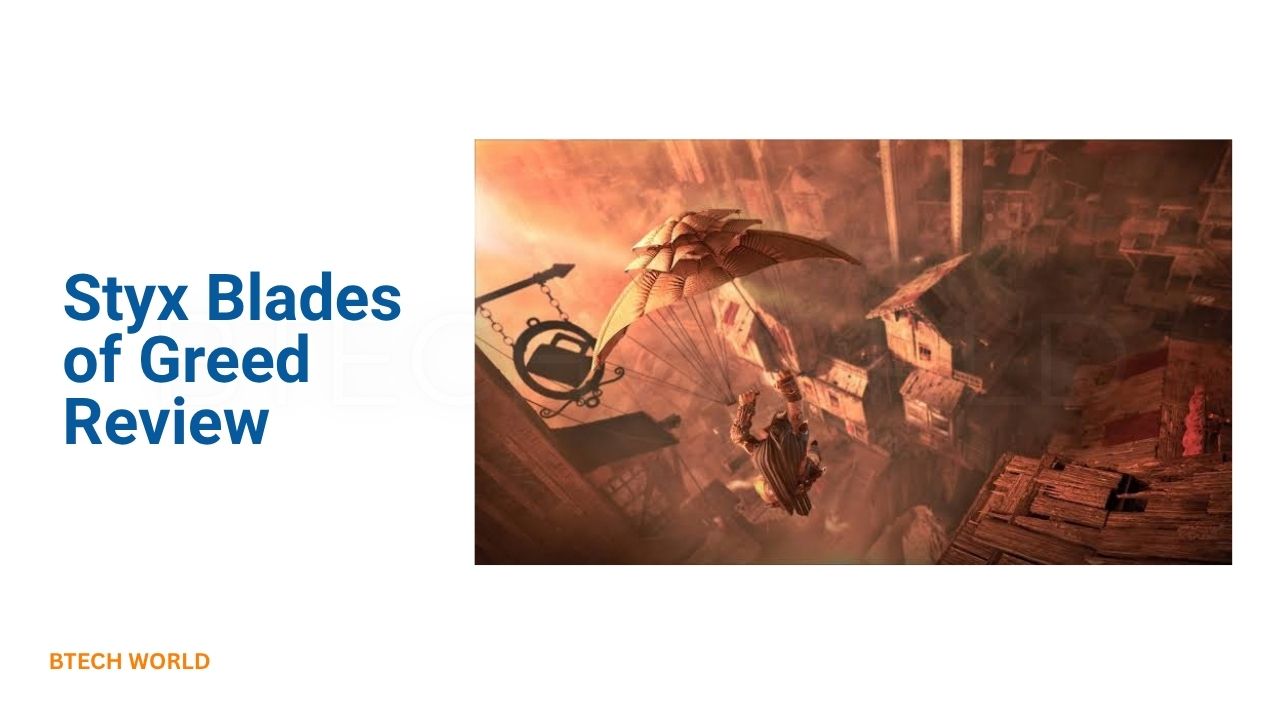
One of the most noticeable changes is the size and structure of the game’s environments. Blades of Greed features three large areas rather than a collection of small traditional levels. These locations are highly vertical, allowing players to move through rooftops, walls, hidden passages, buildings, and elevated platforms.
The vertical design works particularly well because Styx moves quickly. Traversal abilities also make exploration more interesting as the game progresses. A hookshot and parachute-style tools can open new routes and allow players to return to earlier locations with fresh possibilities. This gives the world a light metroidvania-style progression system.
Abilities and Quartz Powers
Styx has an extensive collection of abilities that support different stealth strategies. His toolkit includes returning powers such as temporary invisibility and throwable clones. New abilities allow players to manipulate enemies and situations in more creative ways.
Quartz also adds another layer to the gameplay. Certain powers can change how players approach difficult encounters. For example, possessing enemies can create opportunities that would otherwise be impossible, while time manipulation can help Styx escape dangerous situations.
The important point is that these abilities are not simply powerful attacks. They work best when combined with observation and planning. Players who experiment with the toolkit can discover unusual ways to bypass guards and environmental obstacles.
Explore Reanimal Game: Gameplay, Story, Features, and Everything You Need to Know
Combat and Enemy Encounters
Although Styx can fight, combat is not the main attraction. The character is far more effective when he remains hidden and controls the situation. Fighting several enemies at once can quickly become overwhelming, making stealth the preferred strategy.
Enemy variety also adds complications. Alongside human guards, players encounter creatures with different behaviors and weaknesses. Some enemies have strong hearing, while others can create dangerous situations simply by getting too close. This forces players to consider more than visual detection when planning a route.
Exploration Rewards Creativity
Exploration feels meaningful because the environments contain multiple routes and optional areas. A player might discover a shortcut through a window, reach a rooftop from a side path, or find a hidden passage beneath a guarded location.
This design encourages curiosity. Instead of asking only where the objective is, players start asking how many ways they can reach it. The large maps also contain side activities and collectibles that encourage additional exploration. As new traversal abilities become available, previously inaccessible areas can become useful again.
Quick Save Makes Experimentation Easier
Stealth games can become frustrating when one mistake forces players to repeat a long section. Styx Blades of Greed addresses this with a quick-save system that supports frequent experimentation.
The system makes failure less punishing because players can save after making meaningful progress. This encourages players to test risky ideas, try alternative routes, and learn from mistakes. The approach fits the game’s overall philosophy because stealth often involves trial and error rather than perfect execution on the first attempt.
Graphics and World Design
The fantasy environments are among the game’s strongest visual elements. The large locations have distinct identities, and their vertical architecture gives players plenty to look at while moving through the world.
PC Gamer highlighted areas such as The Wall and Turquoise Dawn for their detailed environments and strong vertical design. The game also returns to Akenash, giving longtime players a connection to the earlier Styx adventure.
The visual presentation is not flawless, however. Reviewers have reported technical issues, including visual bugs and occasional performance problems. These issues do not completely undermine the experience, but they can interrupt an otherwise carefully designed stealth session.
Performance and Technical Issues
Technical stability is one of the areas where the game receives mixed feedback. Some reviews reported frame-rate problems, bugs, subtitle issues, and occasional crashes on PC. Other reviewers described performance as manageable but noted that certain environments could cause frame drops.
These problems matter more in a stealth game because timing and precision are important. A visual glitch or unexpected detection can be especially frustrating when players are carefully planning an infiltration. Future patches could improve the experience if these problems are addressed.
Voice Acting and Presentation
Styx himself remains an important part of the game’s personality. His sarcastic dialogue and unusual attitude give the adventure a distinctive tone. The protagonist’s performance has received more positive comments than some of the supporting performances.
However, some reviewers criticized the voice acting for secondary characters and described certain cutscenes as less polished. This creates a contrast between the strong gameplay systems and some presentation elements that feel closer to a smaller-budget production.
Platforms and Accessibility
Styx Blades of Greed is available on PC, PlayStation 5, and Xbox Series X|S. The PC version supports keyboard and mouse as well as controllers, although the developers recommend using a controller. Steam also lists features such as adjustable difficulty, save-anytime functionality, subtitle options, color alternatives, camera comfort settings, and customizable audio controls.
The game is designed as a single-player experience. There is no central multiplayer campaign competing with the stealth adventure. This keeps the focus on exploration, experimentation, and Styx’s individual abilities.
What Makes Blades of Greed Different?
Many modern action games include stealth as one option among several. Styx Blades of Greed takes the opposite approach. Stealth is not simply a useful feature. It is the foundation of the entire experience.
That commitment gives the game a distinctive identity. Players who enjoy studying enemy behavior, searching for alternative routes, and repeating sections to perfect an infiltration may find the design especially rewarding. The game does not try to turn Styx into a traditional action hero, and that limitation actually defines much of its gameplay.
How Does It Compare With Earlier Styx Games?
The new game remains recognizable to fans of Styx: Master of Shadows and Styx: Shards of Darkness. The basic philosophy is still built around sneaking, climbing, hiding, assassination, and using supernatural abilities.
The major difference is scale. Blades of Greed expands the environments and introduces more open exploration. Traversal upgrades also provide a reason to revisit locations. Reviewers have described the result as an evolution of the established Styx formula rather than a complete reinvention.
Is Styx Blades of Greed Worth Playing?
Whether Styx Blades of Greed is worth playing depends heavily on what you expect from a stealth game. Players looking for a traditional stealth experience with large environments, vertical movement, creative abilities, and multiple approaches will find plenty to explore.
The technical problems are the biggest limitation. Bugs, performance issues, uneven voice acting, and occasional rough edges prevent the game from feeling completely polished. Still, the underlying stealth design remains strong, and multiple reviews have praised its creativity and level design.
Styx Blades of Greed Review — Final Thoughts
Styx Blades of Greed is a focused stealth adventure that understands what makes the genre satisfying. Its large vertical maps, creative abilities, quick-save system, and flexible infiltration routes create plenty of opportunities for experimentation.
It is not a technically perfect game. Some bugs and presentation issues can interrupt the experience, particularly on PC. Yet the core gameplay remains compelling because the game rewards patience, observation, and creativity. For players who miss traditional stealth adventures, Styx’s latest journey offers a distinctive alternative to more action-focused games.
FAQs
Is Styx Blades of Greed a new game?
Yes. Styx Blades of Greed is the third main game in the Styx series and follows Styx: Shards of Darkness.
When was Styx Blades of Greed released?
The game was released on February 19, 2026, for PC, PlayStation 5, and Xbox Series X|S.
Is Styx Blades of Greed an open-world game?
It uses a semi-open structure with three large areas that provide significant freedom of movement and multiple routes.
Can Styx fight enemies directly?
Yes, but direct combat is risky. The game strongly encourages players to use stealth, environmental opportunities, and Styx’s abilities instead.
Is Styx Blades of Greed single-player?
Yes. The game is designed as a single-player stealth adventure.
Explore More: BTECH WORLD