Graph Database News: Latest Updates, Trends, and Industry Developments

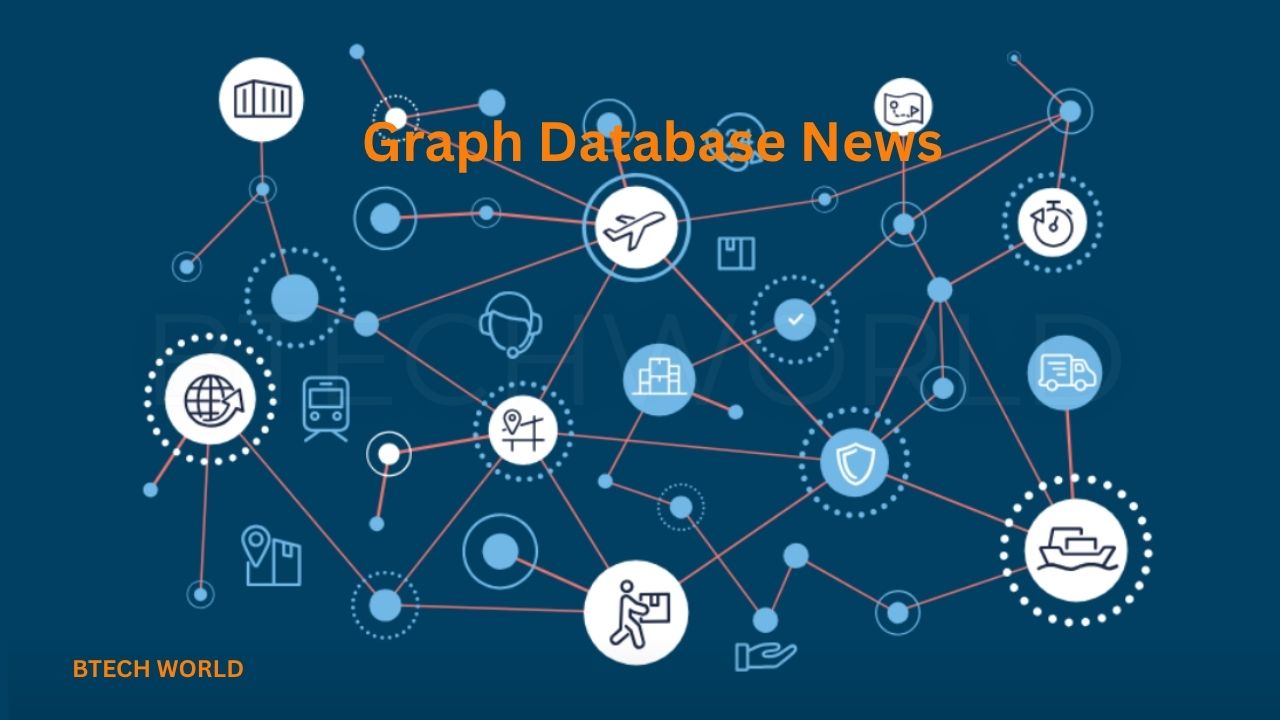
Graph databases are becoming an important part of modern data management as businesses look for better ways to understand relationships between people, products, transactions, and digital systems. Unlike traditional databases that often organize information into tables, graph databases represent data through connected entities and relationships. This structure makes them useful for fraud detection, recommendation systems, knowledge graphs, and artificial intelligence.
In 2026, graph database news increasingly focuses on AI applications, knowledge graph development, real-time analytics, and tools that help organizations manage connected information at scale. Major platforms such as Neo4j, Amazon Neptune, and TigerGraph continue to develop features for enterprise data and AI workloads.
For developers, data engineers, and business leaders, following these developments can help identify useful technologies, understand emerging industry trends, and make better decisions about data infrastructure.
Latest Graph Database Industry Updates in 2026
Several recent developments show how graph technology is evolving beyond traditional data storage and into analytics, enterprise AI, and intelligence applications.
Neo4j Expands Its Graph Intelligence and AI Capabilities
Neo4j announced an agreement to acquire GraphAware on June 3, 2026, with plans to combine graph technology and intelligence analysis capabilities. In September, Neo4j introduced GraphAware Financial Crime Intelligence, aimed at helping financial institutions detect, investigate, and prevent financial crime.
Neo4j has also focused on helping organizations scale AI applications. Its recent developments include virtual graph capabilities for working with data where it already resides, multiple-database support, cross-cluster replication, and graph analytics improvements. These capabilities target organizations that need to manage larger workloads without making their data infrastructure unnecessarily complicated.
Amazon Neptune Strengthens Cloud-Based Graph Analytics
Amazon Neptune remains an option for businesses building graph applications within Amazon Web Services. It supports connected-data workloads and provides Neptune Analytics for graph analysis.
In January 2026, AWS announced that Neptune Analytics had become available in seven additional regions, expanding access to graph analytics across more geographic locations. AWS also highlights GraphRAG capabilities through Amazon Bedrock Knowledge Bases, helping developers connect graph data with generative AI applications.
This development is relevant to organizations that already use AWS and want to add relationship analysis or graph-based context to their applications without managing every part of the underlying infrastructure themselves.
TigerGraph Continues Developing Enterprise Graph Technology
TigerGraph’s product updates and technical content reflect growing interest in large-scale graph analytics, AI agent memory, and hybrid graph-and-vector search. Its official documentation lists TigerGraph DB 4.1.5 as released on October 9, 2026.
These developments address demanding workloads in which organizations need to analyze relationships across large datasets. Common applications include financial risk analysis, fraud prevention, supply chain monitoring, and customer relationship intelligence.
Major Graph Database Trends to Watch
The latest industry developments point toward several broader trends that may influence how organizations use graph technology.
1. GraphRAG and Artificial Intelligence
Retrieval-Augmented Generation, or RAG, allows AI systems to retrieve relevant information before generating a response. GraphRAG extends this approach by using connected entities and relationships to provide additional context.
For example, a business assistant might need to understand how a supplier relates to a manufacturer, a shipping company, and a delayed order. A graph can represent those connections and help an AI application retrieve information across them.
Graph-based retrieval does not automatically make AI responses accurate. Data quality, retrieval design, and model behavior still matter. However, graph structures can provide useful context for questions that depend on relationships rather than isolated documents.
2. Real-Time Relationship Analytics
Businesses increasingly need to understand relationships as events happen. Banks may examine transaction networks for suspicious activity, while online platforms may analyze user interactions to improve recommendations.
Graph databases can help applications traverse connected records and identify patterns across multiple relationships. When paired with suitable streaming pipelines and analytics tools, they can support timely decisions.
Performance depends on data size, query complexity, system architecture, and workload. Organizations should benchmark their requirements rather than assume every graph database can handle every real-time task equally well.
3. Graph and Vector Database Integration
Vector search identifies information based on numerical representations of meaning, while graph databases represent explicit relationships between entities. Combining the two can support applications that need both semantic similarity and structured context.
For instance, a customer support system could use vector search to find documents related to a question and graph queries to identify the products, policies, or customer accounts associated with those documents.
This hybrid approach is becoming relevant to AI search, knowledge management, and enterprise assistants. The best architecture depends on whether a project needs relationship traversal, semantic search, or a combination of both.
4. Cloud-Native Graph Platforms
Managed graph services reduce the need for teams to maintain database infrastructure manually. Cloud providers and database vendors continue to improve deployment, monitoring, scaling, and integration with existing data services.
For organizations with distributed applications, cloud-native options can simplify operations and help teams introduce graph technology gradually. Nevertheless, pricing, data residency, vendor dependence, and integration requirements remain important considerations.
Where Are Graph Databases Used?
Graph databases support a variety of business and technical applications.
- Fraud detection: Connect accounts, devices, transactions, and identities to investigate suspicious activity.
- Recommendation engines: Identify relationships between users, products, interests, and preferences.
- Knowledge management: Organize information and relationships to support search and AI applications.
- Cybersecurity: Analyze connections between users, devices, permissions, and potential threats.
- Supply chain management: Map suppliers, facilities, shipments, and dependencies to identify risks.
- Social networks: Represent users, connections, groups, and interactions.
The common theme is connected information. Graph databases are especially useful when relationships are central to the question an application needs to answer.
How to Choose the Right Graph Database
Choosing a graph database requires more than comparing feature lists. Teams should first identify the problem they want to solve and the type of data they need to represent.
Neo4j may suit projects that value a mature graph ecosystem and developer-friendly tooling. Amazon Neptune can be attractive for teams already working within AWS. TigerGraph is another platform to evaluate for demanding enterprise graph analytics. These are starting points, not universal rankings; the right choice depends on workload and requirements.
Before making a decision, evaluate:
- Query requirements: Determine how deeply queries need to traverse relationships.
- Scalability: Estimate data growth, concurrent requests, and analytical workload size.
- Integration: Check compatibility with existing applications, cloud services, and data pipelines.
- Security: Review access controls, encryption, auditing, and compliance requirements.
- Total cost: Consider hosting, storage, analytics, support, and operational effort.
- Developer experience: Evaluate query languages, documentation, libraries, and monitoring tools.
A small proof of concept can reveal performance and compatibility issues before an organization commits to a long-term platform.
Challenges Facing the Graph Database Industry
Despite its potential, graph technology introduces practical challenges. Designing a useful graph data model requires understanding how entities relate to one another. Poorly defined relationships can lead to confusing queries and unreliable results.
Large graphs can also demand careful performance planning. Complex traversals, frequent updates, and high query concurrency may require specialized indexing, capacity planning, and workload optimization.
Integration is another consideration. Many businesses store information across relational databases, data warehouses, documents, and external systems. Connecting these sources while preserving data quality and governance can require substantial engineering work.
Finally, graph databases are not a replacement for every database type. Relational databases remain effective for many structured transactional workloads, while document and vector databases serve other needs. A sensible architecture selects technologies based on the actual problem rather than following trends alone.
What Is Next for Graph Database Technology?
Graph database development is likely to remain closely connected with enterprise AI, knowledge graphs, advanced analytics, and data integration. As organizations move AI projects into production, they need systems that can provide relevant context, maintain trustworthy relationships, and support operational workloads reliably.
Vendors are responding with improvements to managed services, graph analytics, hybrid search, and AI integrations. However, adoption will depend on measurable business value, implementation complexity, and the ability to maintain secure and reliable data.
For developers and business leaders, the most useful approach is to follow official release notes, test relevant features, and evaluate new products against real use cases. Industry announcements can reveal promising directions, but practical testing determines whether a technology is right for a particular project.
Conclusion
Graph database news in 2026 highlights a shift toward connected data, AI-powered applications, and scalable relationship analytics. Neo4j’s work on graph intelligence, Amazon Neptune’s cloud analytics capabilities, and TigerGraph’s continued product development illustrate how the market is evolving.
As GraphRAG, hybrid search, and real-time analytics gain attention, graph databases offer valuable options for applications that depend on understanding relationships. Organizations should still compare platforms carefully, test realistic workloads, and consider cost, security, and integration before adopting a solution.
Frequently Asked Questions (FAQs)
Q1. What is graph database news?
Graph database news covers new releases, product announcements, industry trends, and technical developments involving databases that organize information as connected entities and relationships.
Q2. What are the leading graph database platforms?
Popular options include Neo4j, Amazon Neptune, and TigerGraph. Other choices may suit particular workloads, depending on scalability, query requirements, deployment preferences, and budget.
Q3. How are graph databases used in AI?
Graph databases can provide structured relationship data for knowledge graphs, GraphRAG systems, recommendation engines, and AI applications that need context from connected information.
Q4. What is GraphRAG?
GraphRAG combines graph-based information and retrieval-augmented generation to help AI systems retrieve contextual information using entities and their relationships.
Q5. Why are graph databases becoming more important?
They help organizations analyze complex relationships that can be difficult to understand through isolated records. This is valuable in fraud detection, cybersecurity, recommendations, knowledge management, and enterprise AI.
Explore More BTECH WORLD