Forbes Global CEO Conference 2026 Key Insights, Speakers, and Highlights

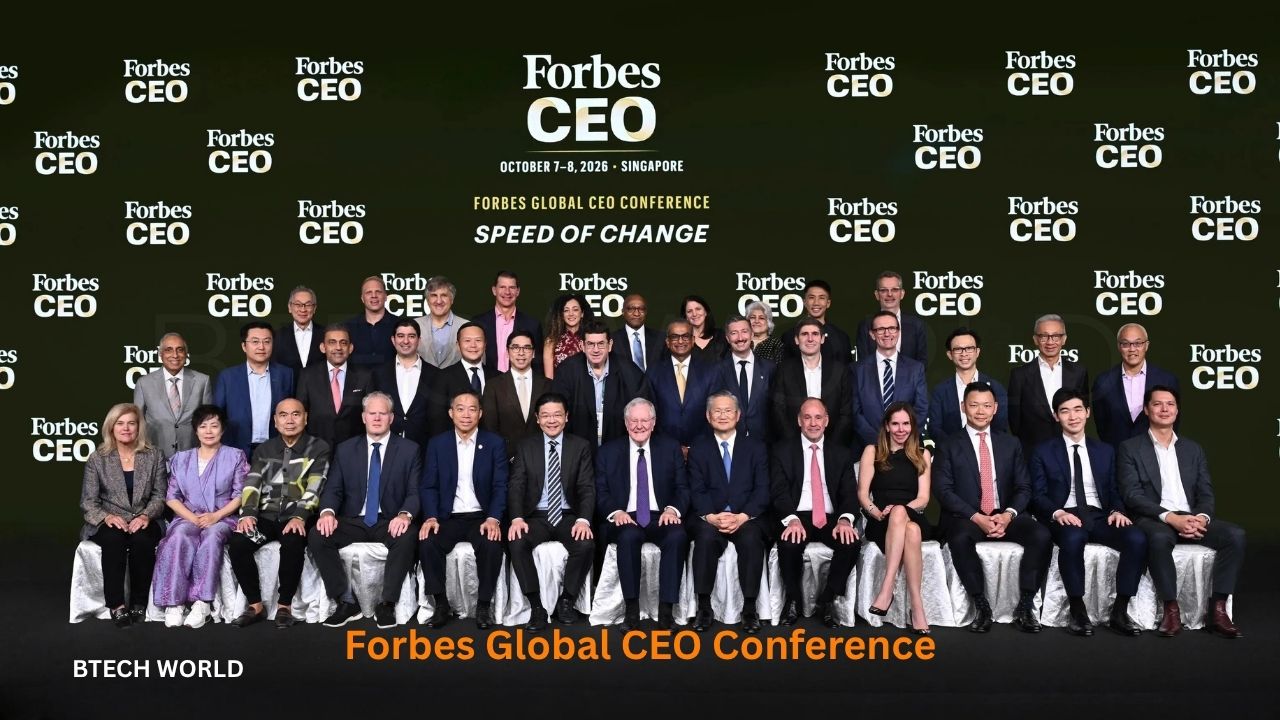
The Forbes Global CEO Conference 2026 brought together influential business leaders, investors, entrepreneurs, and policymakers to discuss the forces reshaping the global economy. Held in Singapore on October 7–8, 2026, the 24th edition of the conference focused on the theme “Speed of Change.” Discussions explored artificial intelligence, investment opportunities, economic uncertainty, energy demand, and the future of global business.
The event highlighted how quickly companies must adapt to technological progress and geopolitical changes. Leaders examined opportunities in emerging markets, the growing influence of AI, and the importance of building resilient businesses. The conference also offered perspectives on how investors can identify long-term opportunities while managing risks in an unpredictable economic environment.
What Is the Forbes Global CEO Conference 2026?
The Forbes Global CEO Conference is an international business gathering organized by Forbes. It brings together executives, entrepreneurs, investors, and public-sector leaders to discuss economic developments and business strategies. The 2026 edition took place in Singapore in partnership with the Singapore Economic Development Board.
According to Forbes, the conference brought together approximately 450 leading CEOs, thought leaders, entrepreneurs, and investors. Its agenda reflected the growing need for businesses to respond quickly to changes in technology, international trade, and global investment.
Rather than focusing on a single industry, the event covered several interconnected areas. These included financial markets, artificial intelligence, renewable energy, manufacturing, healthcare, and international business expansion. This broad approach allowed participants to examine how developments in one sector can influence opportunities and challenges across the wider economy.
Major Speakers at the Conference
The 2026 conference featured prominent political leaders and executives from different industries. Their participation brought together perspectives from government, technology, finance, investment, and manufacturing.
Notable speakers included:
- Steve Forbes: Chairman and Editor-in-Chief of Forbes Media.
- Lawrence Wong: Prime Minister and Minister for Finance of Singapore.
- Anutin Charnvirakul: Prime Minister of Thailand.
- Ferdinand R. Marcos Jr.: President of the Philippines.
- Ray Dalio: Founder of Bridgewater Associates and Chairman of Dalio Family Office.
- Kiran Mazumdar-Shaw: Founder and Chairperson of Biocon.
- Jenny Johnson: CEO of Franklin Templeton.
- Eduardo Saverin: Co-founder of Meta and co-founder and co-CEO of B Capital.
- Roshni Nadar Malhotra: Chairperson of HCLTech and HCL Group.
- Forrest Li: Founder and CEO of Sea.
- Dilhan Pillay Sandrasegara: CEO of Temasek Holdings.
- Richard Smith: COO, International, and CEO, Airline, at FedEx.
These speakers represented a wide range of industries and business environments. Their discussions addressed technological disruption, investment decisions, international cooperation, and the changing priorities of global companies.
Key Theme: Speed of Change
“Speed of Change” captured the central challenge facing businesses in 2026. Artificial intelligence, robotics, changing trade policies, and geopolitical tensions are influencing how companies compete and make decisions. Organizations that respond quickly can gain advantages in productivity, customer service, and operating costs.
However, speed alone does not guarantee success. Companies must understand which changes deserve immediate attention and which investments support sustainable growth. Business leaders increasingly need to balance experimentation with careful planning, particularly when technology and economic conditions can change rapidly.
The conference emphasized the importance of adaptability. Companies may need to revise supply chains, explore new markets, adopt new technologies, and strengthen their financial positions. Leaders who prepare for different scenarios can respond more effectively when unexpected developments occur.
Artificial Intelligence and the Future of Business
Artificial intelligence was one of the conference’s major discussion areas. Businesses are investing in AI tools to automate tasks, improve productivity, develop new products, and analyze large amounts of information. These technologies are also changing how companies approach software development, marketing, customer support, and research.
During discussions about AI innovation, technology leaders examined competition among frontier-model developers, open-source systems, and specialized applications. Speakers also considered how companies can create practical products that solve real problems rather than relying entirely on excitement surrounding new technology.
For business owners, the key lesson is to connect AI investments with measurable outcomes. A company should identify where automation can improve efficiency or customer experience before introducing new tools. It must also consider data privacy, security, employee training, and the reliability of AI-generated results.
AI adoption may create opportunities for smaller businesses as well as large corporations. Accessible tools can help teams complete work more efficiently, although successful implementation still requires appropriate oversight and clear business objectives.
Global Economy and Investment Opportunities
Economic uncertainty was another important topic. International conflicts, trade tensions, interest rates, and changing government policies can influence investment decisions and business confidence. Companies operating across borders must consider how these developments affect production costs, access to markets, and future demand.
During his conference remarks, Steve Forbes discussed the resilience of the global economy while highlighting concerns about rising debt and interest rates. Other discussions explored how investors can distinguish promising technologies from investments that offer attractive returns at their current prices.
This distinction matters because an innovative company does not automatically represent a good investment. Investors must consider valuation, competition, profitability, financial stability, and the time required to achieve returns.
The conference also highlighted the importance of maintaining flexibility. Businesses with sound financial planning and access to capital may be better positioned to respond to unexpected developments. Investors, meanwhile, need to evaluate both the potential rewards and the risks associated with emerging industries.
Why Southeast Asia Is Attracting Global Investors
Southeast Asia remained an important focus because of its expanding consumer markets, manufacturing capabilities, digital businesses, and growing role in international trade. Countries across the region are attracting attention from companies seeking new customers and opportunities to diversify their operations.
Conference discussions examined the region’s potential in technology, investment, and cross-border economic cooperation. Financial leaders also highlighted the importance of liquidity and flexibility when businesses face uncertain conditions.
Singapore’s role as the conference host reflected its position as a regional business and financial center. Its established infrastructure and connections with international markets make it an important location for companies exploring opportunities across Asia.
Nevertheless, investors must evaluate individual markets carefully. Regulations, infrastructure, workforce availability, currency movements, and political conditions can differ significantly between countries. Long-term success requires understanding local markets rather than treating Southeast Asia as a single, uniform economy.
Energy Demand and the AI Data Center Challenge
The rapid expansion of artificial intelligence is increasing demand for computing infrastructure. Data centers require substantial electricity to operate servers, cooling equipment, and supporting systems. As companies build more AI infrastructure, access to dependable and affordable power is becoming an important business consideration.
At the conference, industry leaders discussed concerns that renewable energy supplies could become a bottleneck for Asia’s growing data center sector. Speakers explored the challenges of securing enough electricity while meeting the needs of expanding digital infrastructure.
This issue connects technology investment with energy policy. Data center developers must consider power availability, grid capacity, energy efficiency, and access to lower-emission electricity. Energy providers, meanwhile, need to plan for demand growth and invest in generation, transmission, and storage where necessary.
The discussion illustrated how developments in one sector can create challenges for another. AI growth depends not only on software and chips but also on the physical infrastructure required to support them.
Leadership Lessons for Business Owners
The conference offered several useful lessons for business owners and executives. First, leaders should monitor technological changes without adopting every new trend. Investments should address clear business needs and produce measurable value.
Second, companies should build resilience into their operations. Diversified suppliers, responsible financial planning, and contingency strategies can help businesses manage disruptions. Flexibility becomes particularly valuable when trade policies and market conditions change quickly.
Third, leaders should encourage continuous learning. Employees need opportunities to develop digital skills and understand how emerging technologies affect their roles. Businesses that combine technology with capable teams may be better positioned to improve productivity and customer service.
Finally, decision-makers should balance short-term performance with long-term goals. Rapid growth can create opportunities, but sustainable success depends on sound management, customer trust, and responsible investment.
Why the Forbes Global CEO Conference Matters
The Forbes Global CEO Conference provides a platform for leaders to exchange ideas about challenges that cross national and industry boundaries. Its discussions help participants understand how developments in technology, finance, energy, and international trade may influence business strategy.
The conference also encourages connections among executives, investors, entrepreneurs, and policymakers. Such conversations can help participants explore partnerships, compare market perspectives, and identify potential areas for collaboration. However, attending the event does not guarantee investment opportunities or business success; outcomes depend on the decisions participants make afterward.
For readers and business professionals who did not attend, the conference’s themes offer a useful way to understand current business priorities. AI adoption, economic resilience, energy security, and international investment are likely to remain important considerations as companies plan their next stages of growth.
Conclusion
The Forbes Global CEO Conference 2026 brought together influential leaders in Singapore to examine how businesses can navigate an era of rapid change. Under the theme “Speed of Change,” discussions explored artificial intelligence, global investment, economic uncertainty, Southeast Asian growth, and the increasing demand for reliable energy.
The event highlighted a central lesson: companies need to adapt quickly while making informed, disciplined decisions. Technology can create significant opportunities, but businesses must also manage financial risks, invest in people, and prepare for unexpected disruptions. For executives, entrepreneurs, and investors, these insights provide a useful perspective on the priorities shaping the global economy.
Frequently Asked Questions
Q1. What is the Forbes Global CEO Conference 2026?
It was the 24th edition of Forbes’ international business conference, held in Singapore on October 7–8, 2026. It brought together business leaders, investors, entrepreneurs, and policymakers to discuss global economic and business issues.
Q2. What was the theme of the Forbes Global CEO Conference 2026?
The theme was “Speed of Change.” It focused on rapid developments in technology, artificial intelligence, trade, geopolitics, and the global economy.
Q3. Who were some of the major speakers?
Notable speakers included Steve Forbes, Singapore Prime Minister Lawrence Wong, Thai Prime Minister Anutin Charnvirakul, Philippine President Ferdinand R. Marcos Jr., Ray Dalio, Kiran Mazumdar-Shaw, and Jenny Johnson.
Q4. What were the main topics discussed?
Major topics included artificial intelligence, investment opportunities, economic uncertainty, international trade, Southeast Asian markets, renewable energy, and electricity demand from data centers.
Q5. Why is the Forbes Global CEO Conference important?
It provides a platform for business leaders and policymakers to exchange ideas, discuss global challenges, explore potential partnerships, and consider strategies for adapting to economic and technological changes.
Explore More BTECH WORLD