
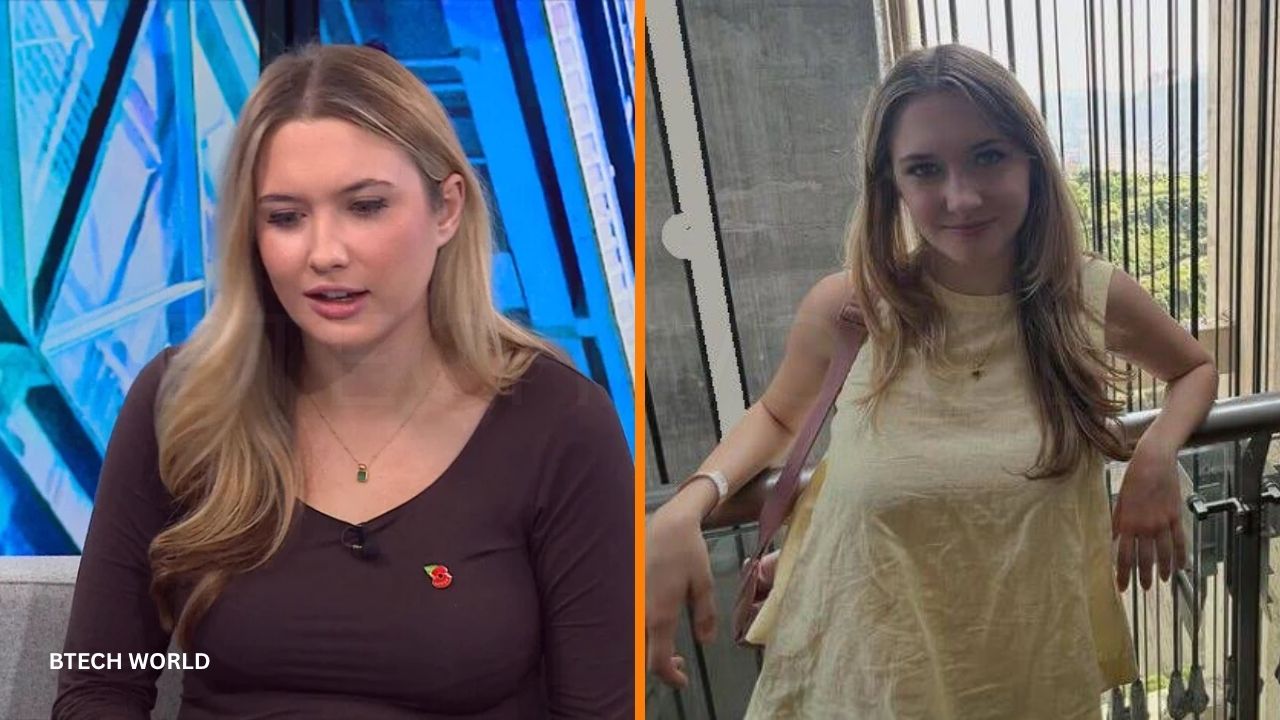
Poppy Coburn Biography Age, Career, Education, and Journalism

Poppy Coburn is a British journalist, editor, and political commentator whose career has developed rapidly across student politics, opinion journalism, television production, and newspaper editing. She is currently associated with The Telegraph, where recent public profiles and Telegraph bylines identify her as an Associate Comment Editor. Her professional work covers politics, culture, universities, immigration, free speech, institutions, and wider debates about British society.
Coburn’s path into journalism is particularly interesting because it began with political and environmental activism during her time at the University of Cambridge. She studied History and Politics, participated in university governance, and wrote about politics while still a student. She later worked at UnHerd and GB News before moving into the comment operation at The Telegraph, establishing herself as a young voice in British opinion journalism.
Quick Bio Poppy Coburn
| Detail | Information |
|---|---|
| Full Name | Poppy Coburn |
| Age | 26 years (2026)* |
| Estimated Birth Date | April 7, 2000* |
| Nationality | British |
| Profession | Journalist, Editor, Political Commentator |
| Current Role | Associate Comment Editor at The Telegraph |
| Education | University of Cambridge |
| Degree | History and Politics, BA (Hons) |
| Former Employer | UnHerd |
| Previous Role | Primetime Producer at GB News |
| Known For | Political and cultural commentary |
| Fellowship | 2024 Publius Fellow, Claremont Institute |
| Main Topics | Politics, Culture, Free Speech, Universities, Immigration |
Who Is Poppy Coburn?
Poppy Coburn is best known for her work as a political writer and editor rather than as a traditional celebrity. Her public profile has grown through newspaper commentary, television and audio appearances, and her involvement in political discussions in Britain and beyond. A current Muck Rack profile identifies her with The Telegraph and lists her among journalists covering opinion and editorial subjects.
Her writing career has included publications such as The Telegraph, UnHerd, The Express, and PoliticsHome, according to a biography published by the Claremont Institute. Her subjects have ranged from free speech and universities to activism, political parties, immigration, and changing cultural attitudes. This range has helped her build a reputation as an opinion journalist whose work often focuses on controversial questions rather than straightforward news reporting.
Poppy Coburn Age and Date of Birth
Poppy Coburn’s exact date of birth is not prominently published in an official employer biography. Several recent biography sites give April 7, 2000 as her birth date, but that date is better described as an evidence-based inference than an officially confirmed public record. In a 2021 first-person article for UnHerd, Coburn wrote that a protest associated with the 2019 Oxford-Cambridge Boat Race took place on her 19th birthday. The 2019 Boat Race was held on April 7.
Based on those two pieces of information, Coburn would have turned 26 in 2026. This is a stronger basis than simply repeating an unsupported age from a biography website, but it is still important to explain the distinction. A responsible biography should say that she is 26 based on publicly available evidence, rather than claiming that her birth date has been officially confirmed by The Telegraph or another authoritative institution.
Poppy Coburn Early Life and Background
There is relatively little reliable public information about Coburn’s childhood and private family background. Most detailed public sources focus on her education, student activities, journalism, and political writing rather than her parents, siblings, or early family life. That makes it difficult to provide a detailed family biography without relying on weak or repetitive online claims.
What is much better documented is the beginning of her intellectual and political development at university. Cambridge became an important part of her early public record, and her experiences there influenced both her political interests and her eventual move into journalism. Her student activism, writing, and participation in university institutions provide more dependable insight into her early years than speculative personal details.
Poppy Coburn Education at Cambridge
Coburn studied History and Politics at the University of Cambridge and graduated with a BA (Hons), according to the Claremont Institute. The same profile says her academic interests included the work of political philosopher Thomas Hobbes, whose ideas about authority, political order, sovereignty, and the state have long been significant in political philosophy.
Her university experience was not limited to classroom study. The Claremont Institute says Coburn was elected as a representative on the University Council board and also debated as a guest at the Cambridge Union. Her early writing also appeared in the student newspaper Varsity, showing that political commentary was already becoming part of her public profile before she entered the national media.
Poppy Coburn and Cambridge Student Politics
Coburn’s time at Cambridge provides an important window into her early political thinking. In January 2020, Varsity published an article co-written by Coburn and Reuben O’Connell Booth arguing that Labour should maintain its socialist principles rather than respond to its 2019 general-election defeat by simply moving back toward the political centre.
Her student political identity later became more complicated. In a 2021 UnHerd essay, Coburn described her earlier involvement with environmental and left-wing activism and reflected on how her views changed. She wrote openly about her participation in climate activism and her eventual disillusionment with parts of the movement. That first-person account is one of the most useful sources for understanding her political evolution.
Poppy Coburn and Extinction Rebellion
One of Coburn’s best-known early essays is “Why I gave up on Extinction Rebellion,” published by UnHerd in September 2021. In the article, she described spending substantial time involved in environmental activism while at Cambridge. She reflected on the political identities she moved through during university and explained why she eventually became critical of activist culture and the strategies used by Extinction Rebellion.
The article is important because it demonstrates that Coburn’s political development was not completely static. Instead, she publicly described a shift away from the activist politics she had previously embraced. The essay also offers one of the strongest clues about her age because she wrote that a protest connected with the 2019 Boat Race happened on her 19th birthday, allowing researchers to estimate her year of birth.
Poppy Coburn’s Early Journalism at UnHerd
Coburn’s professional journalism career included an editorial traineeship at UnHerd. Her author archive shows a substantial collection of articles published during 2021, covering topics including free speech, environmental activism, university culture, feminism, policing, social media, and political ideas.
These early articles show that she was already developing a recognizable style based on arguments, commentary, and personal political analysis. Rather than concentrating only on conventional reporting, Coburn wrote about contentious cultural and political issues and often approached them from an argumentative perspective. This foundation in opinion journalism later fit naturally with her work on the comment side of a national newspaper.
Poppy Coburn at GB News
Before becoming established at The Telegraph, Coburn also worked at GB News, where the Claremont Institute identifies her as a primetime producer. A producing role differs from being a newspaper columnist because it involves helping organize stories and broadcasts, working under deadlines, and understanding how political and current-affairs material is developed for television audiences.
This experience added a broadcast dimension to Coburn’s background. Her move between editorial writing and television production is significant because it demonstrates that her career has not followed a single medium. The combination of newsroom editing, television production, and opinion writing has helped her become comfortable working across several formats within political media.
Poppy Coburn and The Telegraph
Coburn joined The Telegraph’s comment operation after her earlier work at UnHerd and GB News. The Claremont Institute described her in 2024 as an Assistant Comment Editor, while more recent 2026 public profiles and Telegraph material identify her as an Associate Comment Editor. This indicates that her responsibilities and professional title have developed over time.
Her current position places her on the opinion and editorial side of one of Britain’s best-known newspapers. A comment editor’s work can involve more than publishing personal articles; it can also involve commissioning, shaping, editing, and developing opinion content. Coburn therefore has an editorial role as well as her own public profile as a writer and commentator.
What Does Poppy Coburn Write About?
Coburn’s journalism covers a wide range of political and cultural topics. Her published work has addressed immigration, free speech, universities, environmental activism, political parties, institutions, social-media culture, and changing attitudes in Britain. Her UnHerd archive provides a useful record of the breadth of subjects she explored early in her career.
Her more recent Telegraph work continues that focus on controversial public questions. For example, a September 2026 Telegraph article identified her as Associate Comment Editor and examined changing public attitudes toward disability and online culture. The article generated discussion and criticism, illustrating how opinion writers can become part of larger debates beyond the newspaper itself.
Poppy Coburn Political Views
Coburn is commonly associated with conservative or right-of-centre political commentary, although her own career history is more complicated than a single political label might suggest. Her student writing included support for socialist arguments, while her later UnHerd work described a break with parts of environmental activism. Her professional affiliations and published work subsequently placed her closer to conservative political circles.
The distinction between a journalist’s subject matter and a formal political identity is important. Opinion journalists write arguments rather than neutral news reports, and individual articles do not necessarily represent a complete political philosophy. Coburn’s public record does, however, show a willingness to challenge established positions and engage directly with political and cultural debates.
Poppy Coburn and the Publius Fellowship
In 2024, Coburn was selected as a Publius Fellow by the Claremont Institute. The institute’s official profile described her as an Assistant Comment Editor at The Telegraph, noted her Cambridge education, and identified her previous work at GB News and published writing for several outlets.
The fellowship is notable because it further connected Coburn with a wider network of political thinkers and commentators. It also reflects the intellectual side of her career, which extends beyond daily journalism. Her academic interest in political philosophy and professional focus on political commentary make this type of fellowship relevant to understanding her broader development as a writer and editor.
Poppy Coburn Media Appearances
Although newspapers remain central to her career, Coburn has also appeared in political media discussions. Her public profile includes television and audio appearances where she discusses issues connected to politics, culture, economics, and public policy. Her experience at GB News as a producer also gives her familiarity with broadcast media from behind the scenes.
Her public commentary has helped increase her visibility beyond newspaper readers. Social media has also played a role, with her public X profile identifying her as a Telegraph Associate Comment Editor and linking followers to her work. This combination of newspaper journalism, broadcasting, and social platforms reflects the way modern political commentators can build audiences across multiple media formats.
Poppy Coburn Writing Style and Journalism
Coburn’s writing often combines political argument with personal observation. Her UnHerd essays, for example, frequently approached broad social debates through experiences from university life, activism, and contemporary British culture. This approach can make opinion journalism more personal than traditional news reporting because the author’s perspective is part of the piece itself.
As an editor, her work also extends beyond her own bylines. Her role within a major newspaper’s comment operation involves the wider editorial process, meaning her influence may include shaping which ideas and contributors receive space. This combination of writer and editor helps explain why her current position is a meaningful step beyond her early career as a trainee and freelance-style contributor.
What Makes Poppy Coburn’s Career Notable?
One of the most notable features of Coburn’s career is the speed at which she moved from university politics into national media. Within a relatively short period, she progressed from student writing and activism to an editorial traineeship at UnHerd, television production at GB News, and comment editing at The Telegraph.
Her career also shows how intellectual interests can shape media work. Her academic study of political philosophy, involvement in university politics, experience in activism, and later work in opinion journalism all connect to the subjects she now covers. Rather than entering journalism from an unrelated profession, Coburn built a path where political interests remained central at every stage.
Poppy Coburn Family and Personal Life
Compared with her professional life, relatively little reliable information is publicly available about Coburn’s family or private relationships. Major professional profiles concentrate on her education and career rather than providing detailed information about parents, siblings, marriage, or a partner.
That limited public record is important when reading online biography pages. Some websites publish personal details without showing reliable sources, while others repeat information from one another. For an accurate biography, the safest approach is to focus on details that Coburn herself has made public or that are supported by established institutions and professional records.
Poppy Coburn’s Public Profile in 2026
In 2026, Coburn is an established name within British opinion journalism, with current public profiles identifying her as an Associate Comment Editor at The Telegraph. Her recent work continues to address controversial cultural and political issues, while her professional background includes UnHerd, GB News, Cambridge, and the Claremont Institute fellowship.
Her profile demonstrates how modern journalists can build influence through a combination of editorial responsibility, personal writing, broadcast appearances, and social-media activity. While she is still relatively young compared with many senior newspaper editors, her progression into a national comment role has made her increasingly visible in British political media.
Final Thoughts on Poppy Coburn
The story of Poppy Coburn is one of a fast-rising British journalist whose career has developed through several stages of political and media work. From studying History and Politics at Cambridge and participating in university politics to working at UnHerd and producing broadcasts for GB News, she gained experience across different parts of the media industry before moving into the comment operation at The Telegraph.
Her current position as an Associate Comment Editor reflects a career built around political ideas, opinion writing, and editorial judgment. Her age is widely estimated at 26 in 2026, although her exact birth date is not formally confirmed in a standard professional biography. Her own writing, particularly her reflections on university activism and Extinction Rebellion, provides valuable context for understanding her development as a commentator.
What makes Coburn particularly interesting is the combination of academic study, political activism, journalism, television production, and editorial work. Rather than following a single straight path, she has moved through several parts of the British media landscape while maintaining a strong focus on politics and culture.
For readers searching for Poppy Coburn biography, the most reliable picture is therefore the one supported by her own published writing and established institutional sources: a Cambridge-educated journalist who moved through UnHerd and GB News before developing a growing editorial role at The Telegraph.
Frequently Asked Questions
Who is Poppy Coburn?
Poppy Coburn is a British journalist, editor, and political commentator associated with The Telegraph. Her current public profiles identify her as an Associate Comment Editor, while her earlier career included work at UnHerd and GB News.
How old is Poppy Coburn?
Publicly available evidence indicates that Poppy Coburn is 26 years old in 2026. This is inferred from her 2021 UnHerd article, in which she said the 2019 Boat Race protest took place on her 19th birthday, combined with the documented April 7 date of the 2019 race.
When was Poppy Coburn born?
The evidence-supported estimate is April 7, 2000, but this should be described as an inferred date rather than a formally confirmed birth record. Her own 2021 writing provides the birthday clue used to make the calculation.
Where did Poppy Coburn study?
She studied History and Politics at the University of Cambridge and graduated with a BA (Hons). The Claremont Institute says she had a particular academic interest in Thomas Hobbes.
Did Poppy Coburn work for GB News?
Yes. The Claremont Institute says she previously worked at GB News as a primetime producer.
Did Poppy Coburn work for UnHerd?
Yes. UnHerd’s own author page identifies Coburn as an editorial trainee and lists numerous articles she published there in 2021.
Explore More BTECH WORLD