
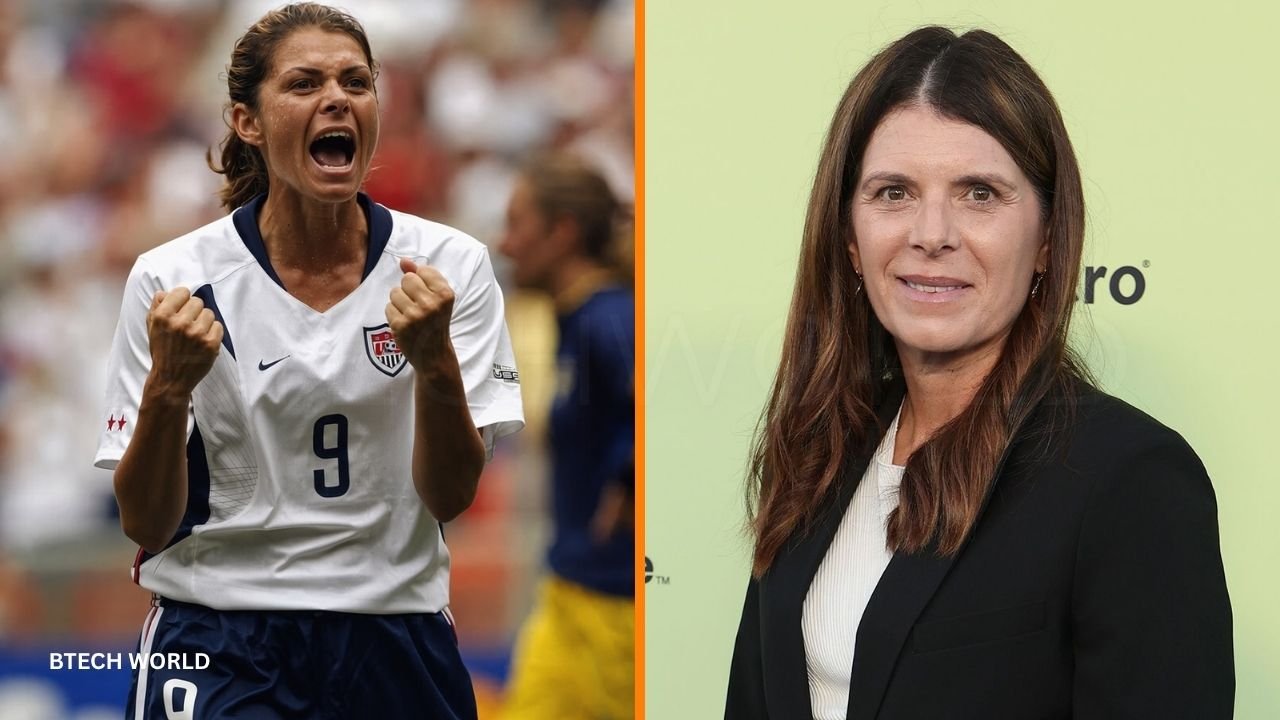
Mia Hamm: The Life and Legacy of a Soccer Legend

Mia Hamm is one of the most influential figures in the history of women’s soccer. Her remarkable performances for the United States women’s national team helped bring international attention to the sport and inspired generations of young athletes. During her 17-year international career, she won two FIFA Women’s World Cups, two Olympic gold medals, and an Olympic silver medal. She also earned recognition as FIFA Women’s World Player of the Year twice, establishing herself among the leading athletes of her generation.
Born Mariel Margaret Hamm on March 17, 1972, in Selma, Alabama, she developed from a talented young player into an international sporting icon. Her success extended beyond goals and trophies. She helped make women’s soccer more visible, supported opportunities for female athletes, and contributed to the development of professional women’s soccer in the United States. Away from the field, Hamm built a family with former MLB star Nomar Garciaparra and established charitable work through the Mia Hamm Foundation. Her story combines sporting excellence, leadership, and a lasting influence on women’s athletics.
Quick Bio: Mia Hamm
| Detail | Information |
|---|---|
| Full Name | Mariel Margaret Hamm |
| Popular Name | Mia Hamm |
| Date of Birth | March 17, 1972 |
| Age | 54 years |
| Birthplace | Selma, Alabama, USA |
| Nationality | American |
| Profession | Former Professional Soccer Player |
| Playing Position | Forward |
| Husband | Nomar Garciaparra |
| Children | 3 |
| Daughter | Ava Caroline Garciaparra |
| Daughter | Grace Isabella Garciaparra |
| Son | Garrett Anthony Garciaparra |
| Marriage Date | November 2003 |
| World Cup Titles | 1991 and 1999 |
| Olympic Gold Medals | 1996 and 2004 |
| Foundation | Mia Hamm Foundation |
| Known For | Transforming Women’s Soccer |
Early Life and Family Background
Mia Hamm was born on March 17, 1972, in Selma, Alabama, into a military family. Her father’s career meant that the family moved frequently during her childhood. She spent part of her early years in Italy before returning to the United States. Experiencing different places and environments became part of her upbringing, while sports remained an important part of family life. Her older brother, Garrett, played a particularly important role in encouraging her interest in athletics. He helped develop her competitive spirit and introduced her to sporting activities at a young age.
Hamm began playing organized soccer as a child and gradually discovered her natural ability for the game. Her speed, coordination, and determination helped her stand out among other young players. Soccer became more than an extracurricular activity as she continued developing her skills through youth competitions. Her family supported her athletic interests, giving her opportunities to improve and compete. Those early experiences helped establish the foundation for her future career. Although she would eventually become internationally famous, her journey began with a young athlete learning the game and building confidence through practice.
Education and College Soccer Career
Hamm attended the University of North Carolina at Chapel Hill, where she played for the university’s women’s soccer team, the Tar Heels. Her college career became one of the most successful periods in the program’s history. She helped North Carolina win four consecutive NCAA women’s soccer championships from 1989 through 1992. Her performances earned her All-American recognition three times and established her as one of the country’s leading collegiate players. The university provided an important environment for her development, allowing her to compete at a high level while continuing her education.
Her success at North Carolina also prepared her for the demands of international soccer. College competition helped her improve her technical ability, tactical understanding, and teamwork. She played alongside talented teammates and worked with coaches who helped develop her potential. Her performances demonstrated that she could contribute consistently in high-pressure matches. By the time she completed her college career, she had already become a recognized name in American soccer. Her achievements at North Carolina were an important part of the story that eventually led to her international success and long-term influence on the sport.
Joining the United States Women’s National Team
Hamm’s international career began in 1987, when she joined the United States women’s national team at just 15 years old. She became the youngest player to appear for the senior national side at that time. Her early selection demonstrated the level of talent she had already developed, although competing internationally as a teenager also brought considerable responsibility. She had to adjust to the pace, physical demands, and expectations of senior-level soccer while continuing her development as a young athlete.
Over the following years, Hamm became an increasingly important member of the national team. She played as a forward and was known for her pace, movement, technical skill, and ability to create scoring opportunities. Her contribution was not limited to finishing attacks; she also helped teammates by creating space and assisting goals. As her experience grew, she became one of the most recognizable players in women’s international soccer. Her long national-team career included four FIFA Women’s World Cups and three Olympic tournaments, giving her opportunities to compete on the sport’s biggest stages.
FIFA Women’s World Cup Victories and International Success
One of Hamm’s earliest major achievements came at the 1991 FIFA Women’s World Cup in China. The United States won the inaugural edition of the tournament, making history in international women’s soccer. Hamm was only 19 years old at the time and became the youngest American woman to win a World Cup championship. The victory helped establish the United States as a major force in the women’s game and gave the national team a platform for future success. Hamm’s participation in the tournament marked the beginning of a legacy that would grow over the next decade.
The 1999 FIFA Women’s World Cup became another defining moment in her career. Hosted in the United States, the tournament attracted enormous attention and helped bring women’s soccer into mainstream sports coverage. The American team defeated China in the final after a penalty shootout at the Rose Bowl in Pasadena. Hamm played an important role throughout the competition, contributing to the team’s attacking strength and overall performance. The tournament became a landmark event for women’s sports in the country. The United States also earned bronze medals at the 1995 and 2003 World Cups, meaning Hamm finished her international career with two championships and two third-place finishes.
Olympic Medals and Major Career Records
Hamm represented the United States at three Olympic Games: Atlanta in 1996, Sydney in 2000, and Athens in 2004. Women’s soccer made its Olympic debut in Atlanta, and the American team won the gold medal. This achievement gave women’s soccer another major international platform and helped increase public interest in the sport. The team later earned silver at the 2000 Sydney Olympics before returning to the top of the podium with gold at the 2004 Athens Games. Hamm’s Olympic record therefore included two gold medals and one silver medal.
Her individual statistics also reflected her importance to the national team. She finished her international career with 275 appearances and 158 goals, according to FIFA’s player profile. She also recorded 144 assists, a national-team record that remains one of her most notable achievements. Her goal total once stood as the highest in international soccer, before other players eventually surpassed it. Hamm’s achievements demonstrate that her influence was not limited to tournament victories. She contributed through scoring, creating chances, and helping the United States maintain its position among the leading teams in women’s soccer.
Awards, Recognition, and Sporting Achievements
Hamm received numerous individual honors during her career. She was named FIFA Women’s World Player of the Year in 2001 and 2002, recognizing her performances among the world’s leading players. She also received the U.S. Soccer Female Athlete of the Year award five consecutive times from 1994 through 1998. These honors reflected her sustained influence on the national team and her ability to perform at the highest level over many seasons. Her achievements also made her one of the most recognizable female athletes in the United States.
In 2004, Hamm was included in FIFA’s list of the 125 greatest living footballers, commonly known as FIFA 100. Brazilian football legend Pelé selected the players for this special recognition, and Hamm was among the women included. She entered the National Soccer Hall of Fame in 2007 and later became part of the U.S. Olympic and Paralympic Hall of Fame’s 2022 class. These honors recognize different aspects of her career, from international performance to her wider contribution to the development of soccer. Her legacy is also reflected in the athletes who followed her and the growing visibility of women’s professional soccer.
Professional Soccer and the Women’s United Soccer Association
Hamm’s career also included professional club soccer. She played for Washington Freedom in the Women’s United Soccer Association, known as WUSA, which became the first major professional women’s soccer league in the United States. The league began in 2001 and offered leading American and international players an opportunity to compete in a professional domestic competition. Hamm became one of its most recognizable athletes, bringing attention to the league through her reputation and performances. Her involvement represented an important stage in the development of professional opportunities for women in American soccer.
Washington Freedom won the WUSA Founders Cup in 2003, giving Hamm another team achievement before her retirement. The league itself faced financial and commercial challenges and ceased operations after the 2003 season. Even though WUSA did not survive, its establishment represented an important attempt to create a lasting professional structure for women’s soccer. Hamm’s participation helped attract fans and media attention to the competition. Her involvement also demonstrated the importance of creating professional environments where talented women could continue playing after college and international careers.
Retirement and Life After Professional Soccer
Hamm announced her retirement from international soccer in 2004 and played her final match for the United States that December. Her farewell came after a successful career that included two World Cup titles, three Olympic medals, and hundreds of international appearances. Leaving the national team marked the end of a major period in American women’s soccer. Her departure also encouraged fans and commentators to reflect on how much the sport had changed during her career. She had entered the national team as a teenager and retired as one of its most influential players.
After retirement, Hamm remained involved in sports, business, and charitable activities. She became a public advocate for opportunities for girls and women in athletics and continued supporting the development of soccer. She and her husband, Nomar Garciaparra, became part of the ownership group of Los Angeles Football Club, which began playing in Major League Soccer in 2018. Her role as an owner connects her to the sport from a different perspective than her playing career. Rather than competing on the field, she has remained involved in the broader business and development of professional soccer.
Marriage to Nomar Garciaparra and Family Life
Mia Hamm married former Major League Baseball player Nomar Garciaparra in November 2003. Their relationship brought together two prominent athletes from different sports. Garciaparra became known for his baseball career with the Boston Red Sox and other MLB teams, while Hamm built her reputation through international soccer. Their marriage has attracted public interest because both achieved success at the highest level of their respective sports. They have generally kept many details of their family life private while occasionally discussing parenting and family experiences in interviews.
The couple have three children: twin daughters Ava Caroline and Grace Isabella, born on March 27, 2007, and a son, Garrett Anthony, born in January 2012. Hamm has spoken publicly about the importance of supporting her children and helping them develop confidence. However, the family does not regularly share extensive details about the children’s private lives. Their education, future careers, and personal interests should not be assumed based on their parents’ achievements. Hamm’s family life is an important part of her biography, but she and Garciaparra have maintained a degree of privacy around their children.
Mia Hamm Foundation and Philanthropic Work
Hamm established the Mia Hamm Foundation in 1999 to support families affected by bone marrow and cord blood diseases and to expand opportunities for girls and women in sports. The foundation’s medical focus has a personal connection to her family. Her younger brother, Garrett, died from complications associated with aplastic anemia, a rare condition affecting the bone marrow. Through the foundation, Hamm sought to raise awareness and provide support for families dealing with serious medical challenges. The work reflects a personal commitment that extends beyond her achievements as an athlete.
The foundation also supports the development of opportunities for young women in sports. Hamm has used her public profile to encourage girls to participate in athletics and to support broader conversations about access and equality. Her charitable work connects two important parts of her life: her family’s experience with bone marrow disease and her understanding of the opportunities that sports can provide. The foundation’s mission demonstrates how her influence has continued beyond retirement. Rather than limiting her legacy to trophies and records, Hamm has also focused on causes that can make a difference in people’s lives.
Mia Hamm’s Legacy and Influence on Women’s Soccer
Hamm’s influence on women’s soccer can be seen in the sport’s growing visibility during the 1990s and early 2000s. Her performances helped attract attention from fans, sponsors, and media organizations. The 1999 World Cup was particularly important because it brought women’s soccer to a much larger audience in the United States. Hamm became one of the central figures associated with that period, alongside teammates who helped the national team achieve international success. Her popularity showed that women’s soccer could attract major public interest and create recognizable sporting stars.
Her legacy also lives through the athletes who followed her. Many young players have identified Hamm as an inspiration, while her career helped demonstrate the possibilities available to women in professional sports. She contributed to the growth of women’s soccer through international competition, professional club participation, charitable work, and advocacy. Although the sport has continued to evolve since her retirement, her achievements remain an important part of its history. Hamm helped create a foundation on which later generations could build, making her influence larger than the statistics recorded during her playing years.
Conclusion
Mia Hamm’s journey from a young soccer player in a military family to one of the most celebrated athletes in women’s sports is a remarkable story of talent, determination, and achievement. Her international career included two FIFA Women’s World Cup championships, two Olympic gold medals, and an Olympic silver medal. She also earned two FIFA Women’s World Player of the Year awards and finished with 158 international goals and 144 assists. These accomplishments established her as a central figure in the history of American soccer.
Her influence did not end when she retired in 2004. Through the Mia Hamm Foundation, her advocacy for women in sports, and her involvement with Los Angeles Football Club, she has continued contributing to the sporting community. Her family life with Nomar Garciaparra and their three children is another important part of her story. Above all, Hamm’s legacy rests on the opportunities she helped create and the athletes she inspired. She remains a defining figure in the growth and recognition of women’s soccer.
Frequently Asked Questions
Who is Mia Hamm?
Mia Hamm is a former American professional soccer player widely recognized for her achievements with the United States women’s national team. She won two FIFA Women’s World Cups and two Olympic gold medals during her international career.
What is Mia Hamm’s real name?
Her full birth name is Mariel Margaret Hamm. She became internationally known as Mia Hamm and is often referred to by that name in sports records and media coverage.
When was Mia Hamm born?
Mia Hamm was born on March 17, 1972, in Selma, Alabama, United States. She is 54 years old as of November 2026.
How many World Cups did Mia Hamm win?
Hamm won two FIFA Women’s World Cup titles with the United States, in 1991 and 1999. She also earned bronze medals at the 1995 and 2003 tournaments.
How many Olympic medals did Mia Hamm win?
She won three Olympic medals: gold at the 1996 Atlanta Games, silver at the 2000 Sydney Games, and gold at the 2004 Athens Games.
How many goals did Mia Hamm score for the United States?
FIFA records 158 international goals for Hamm in 275 appearances. She also recorded 144 assists, which remains a notable part of her national-team record.
Who is Mia Hamm’s husband?
Mia Hamm is married to former professional baseball player Nomar Garciaparra. They married in November 2003 and have three children together.
How many children does Mia Hamm have?
She has three children with Nomar Garciaparra: twin daughters Ava Caroline and Grace Isabella, and a son named Garrett Anthony.
STAY FOR MORE UPDATE: BTECHWORLD