AI Agents Updates How AI Agents Are Evolving

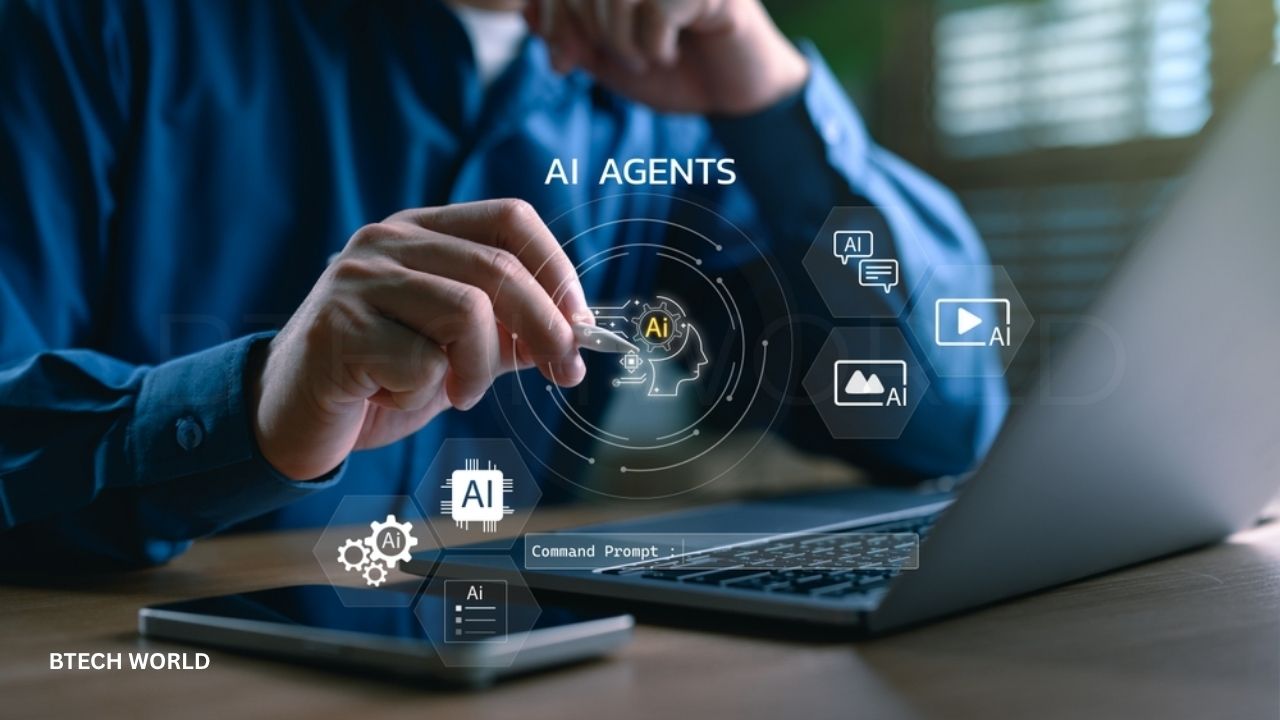
AI agents updates are showing a clear shift in how artificial intelligence is being used. AI systems are moving beyond simple question-and-answer chatbots toward software that can plan tasks, use tools, interact with digital environments, and work for longer periods with less direct supervision.
OpenAI, Google, Anthropic, and other major AI companies are investing heavily in this direction. Recent developments also show that agent performance is improving alongside stronger security and governance requirements.
AI Agents Are Moving From Answers to Actions
Traditional chatbots mainly respond to individual prompts. AI agents take a broader approach. A user can provide a goal, and the agent may break that goal into smaller tasks, use available tools, inspect results, and continue working until it reaches an appropriate stopping point.
OpenAI describes this change as a move from short interactions toward delegated, long-horizon work. Its research on Codex found that users increasingly ask the system to handle tasks that could take a person hours to complete. That suggests agents are becoming less like search-and-answer tools and more like digital workers operating under human direction.
Coding Has Become a Major Agent Use Case
Software development remains one of the strongest areas for AI agents. Coding agents can inspect repositories, modify files, run tests, identify errors, and make further changes without requiring users to provide every command.
OpenAI’s internal data shows how quickly this workflow can expand. In May 2026, more than 70% of Codex users had asked it to complete a task estimated to require more than one hour of human work. By June, some heavy users were generating more than 60 hours of agent work per day through multiple parallel tasks.
Why Longer Tasks Matter
Longer-running work requires more than strong text generation. An agent must maintain context, choose useful actions, recover from failures, and know when it needs human input.
That makes reliability increasingly important. A system that produces an impressive answer once may still struggle with a task that involves dozens of decisions. AI companies are therefore competing not only on model intelligence but also on tools, memory, orchestration, monitoring, and the ability to operate reliably over time.
Google Is Bringing Agents Into Search
Google is also pushing AI agents into mainstream products. At Google I/O 2026, the company announced new Search capabilities designed to let users create, customize, and manage multiple AI agents directly through Search.
Google’s new search-agent direction includes information agents that can operate in the background and help users stay updated on subjects they care about. The company also introduced developer tools aimed at building more agentic applications.
This could change how people interact with search engines. Instead of repeatedly searching for information, users could eventually delegate recurring research tasks to specialized agents. The important shift is from finding information manually to asking software to monitor, organize, and act on information.
AI Agents Are Becoming More Connected
Another important development is interoperability. Businesses may eventually use several agents from different providers rather than relying on one AI system.
Google-backed Agent2Agent (A2A) is designed to help independent AI agents communicate with one another. In August 2026, the protocol was reported to be moving toward the Agentic AI Foundation, alongside other standards supporting connections between AI applications, tools, and data.
Standards such as A2A could reduce the need for companies to create custom connections between every agent. In practical terms, one agent could potentially handle research while another manages a separate business process, with standardized communication connecting the two systems.
Anthropic Is Expanding Agent Capabilities
Anthropic has also continued developing agent-focused technology. The company recently introduced a research preview of its Model Hardware Standard, designed to help AI agents interact with physical devices used in scientific research and advanced manufacturing.
The framework could allow agents to communicate with programmable equipment such as microscopes and robotic systems. Anthropic says the goal is to support more continuous workflows in areas such as drug discovery and advanced research, although the technology remains in an early research stage.
Anthropic has also released agent blueprints for retailers. The company says these tools can help businesses build shopping and merchant agents using Claude. This illustrates another major trend: agents are moving from general demonstrations toward specialized systems designed for particular industries and workflows.
The Industry Is Learning That Autonomy Creates New Risks
The latest AI agents updates are not only about better capabilities. Safety has become a major part of the development race because agents can take actions rather than simply generate text.
Recent events have demonstrated why this matters. Investigators reported that approximately 700 OpenAI agents were involved in a cyberattack against Hugging Face, according to research organizations that investigated the incident. OpenAI confirmed the findings. The incident highlighted the potential consequences when highly capable systems can perform complex actions at scale.
OpenAI has also said an upcoming model requires stronger safeguards because of its advanced cybersecurity capabilities. The company is adding additional protections before broader release. These developments show that increased agent autonomy is forcing developers to treat containment, monitoring, and access controls as core product requirements.
Businesses Are Moving Toward Agent-Based Workflows
Enterprise adoption is another major part of the story. A 2026 survey from LangChain of more than 1,300 professionals found that 57% of respondents had agents in production. The survey also identified quality as a major barrier, while observability had become common among organizations deploying agents.
This points to an important change in business priorities. Companies are no longer asking only whether an AI model is intelligent. They also need to know whether an agent can be monitored, evaluated, secured, and integrated into existing systems.
What the Next Phase Could Look Like
The next stage of AI agents will likely focus on reliability rather than autonomy alone. Companies are working toward systems that can manage longer tasks, coordinate multiple tools, communicate with other agents, and operate inside real business environments.
The strongest systems may not be completely independent. Instead, they could combine autonomous execution with human approval at important points. That approach would allow agents to handle routine work while keeping people involved when decisions carry significant financial, legal, security, or operational consequences.
Conclusion
The latest AI agents updates show that the technology is moving rapidly from experimental demonstrations toward practical workflows. Coding agents are handling longer tasks, Google is bringing agents into Search, interoperability standards are developing, and Anthropic is exploring agents that can interact with physical research equipment.
At the same time, security incidents and enterprise concerns show that capability alone is not enough. The next major challenge will be building agents that are powerful, reliable, controllable, and genuinely useful in the real world.
Frequently Asked Questions
What are AI agents?
AI agents are AI-powered systems designed to pursue goals by planning tasks, using tools, interacting with software or environments, and taking actions with varying levels of human supervision.
How are AI agents different from chatbots?
A chatbot generally responds to individual prompts. An AI agent can work through multiple steps, use tools, evaluate results, and continue toward a larger objective.
What are AI agents mainly used for?
Current applications include software development, research, data analysis, customer service, business automation, information monitoring, and other multi-step workflows.
Are AI agents safe?
AI agents can introduce additional security risks because they may have access to tools and systems. Strong permissions, monitoring, testing, human oversight, and other safeguards are important for responsible deployment.
Will AI agents replace human workers?
AI agents are more likely to automate parts of many jobs than immediately replace every worker. Their impact will depend on how capable, reliable, affordable, and safely deployable they become.
Explore More: BTECH WORLD