What Is AI-102 Certification? A Complete Guide for Azure AI Developers

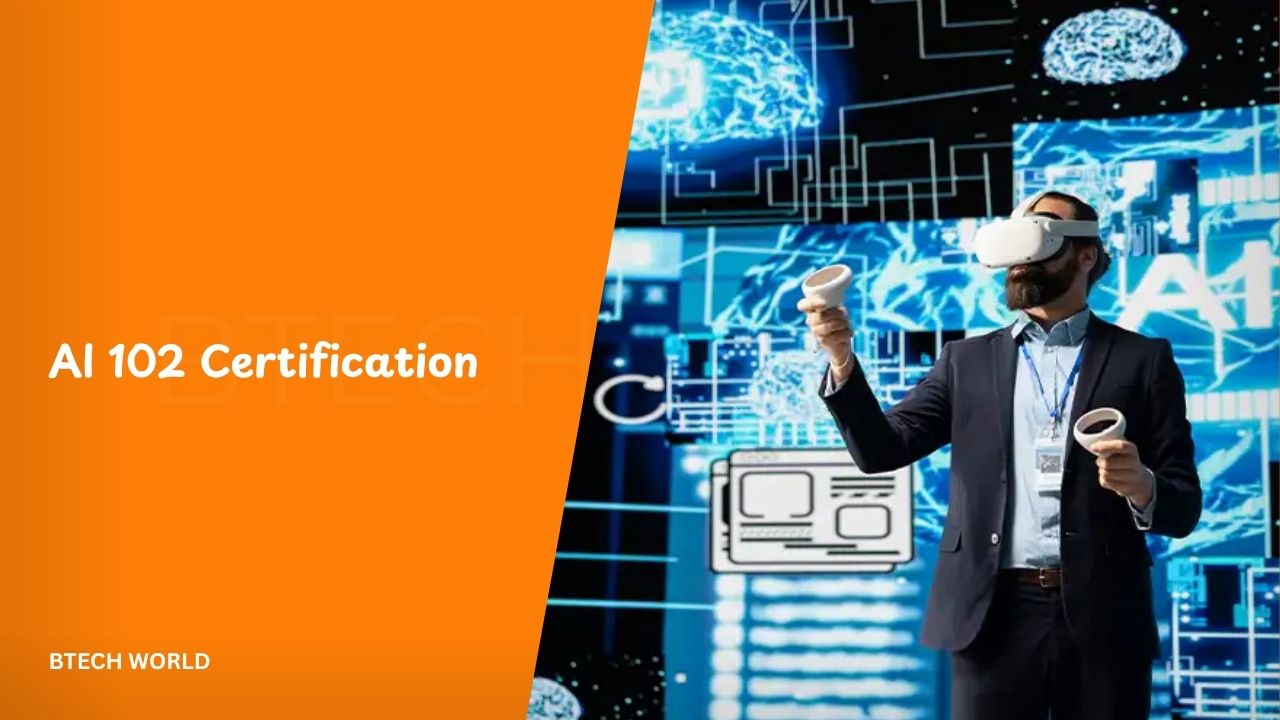
The AI-102 certification is a Microsoft credential designed for professionals who want to demonstrate their skills in building and deploying AI solutions on Microsoft Azure. It focuses on practical AI development, including generative AI applications, natural language processing, computer vision, and Azure AI services.
For developers who want to work with artificial intelligence in business environments, this certification can provide a structured learning path. It helps candidates understand how to connect AI models with applications, manage data, implement responsible AI practices, and develop solutions that address real-world problems.
Whether you are a software developer, cloud engineer, or aspiring AI specialist, understanding the AI-102 exam requirements can help you decide how to prepare and whether the certification matches your career goals.
Important Update: Is AI-102 Certification Still Available?
As of October 2026, Microsoft AI-102 is retired. The AI-102 exam and the Azure AI Engineer Associate certification were retired on June 30, 2026. Candidates can no longer take the exam to earn this credential through the normal certification process.
Microsoft introduced AI-103: Azure AI Apps and Agents Developer Associate as the replacement certification. It focuses on developing AI-powered applications and agents, reflecting the industry’s shift toward generative AI and agent-based solutions.
If you are researching AI-102 for learning purposes, its skills and study materials can still provide useful background. However, new candidates should focus on the current certification pathway rather than preparing for an exam that is no longer available.
What Did the AI-102 Certification Cover?
Before its retirement, AI-102 was intended for developers who designed, built, deployed, and maintained AI solutions using Microsoft Azure. It assessed practical knowledge of Azure AI services and the ability to integrate AI capabilities into applications.
The exam covered several major technical areas:
- Azure AI solution management: Selecting suitable services, configuring resources, managing costs, and securing AI solutions.
- Generative AI: Building applications with language models, prompt engineering, and retrieval-augmented generation (RAG).
- Computer vision: Analyzing images, recognizing objects, extracting text, and working with video.
- Natural language processing: Analyzing sentiment, extracting entities, translating text, and processing speech.
- Knowledge mining: Searching documents, extracting information, and building solutions that make business information easier to find.
- Responsible AI: Applying safeguards, content moderation, privacy controls, and appropriate security practices.
These skills remain relevant for developers working with Azure AI technologies, even though the original AI-102 exam is no longer available.
AI-102 Exam Format and Passing Score
AI-102 was a role-based certification exam that tested a candidate’s ability to design and implement Azure AI solutions. Microsoft required candidates to achieve a score of at least 700 on its 1,000-point scoring scale to pass.
The exam could include scenario-based questions and questions about selecting appropriate Azure services for specific requirements. Candidates needed to understand not only individual AI tools but also how those tools fit into complete application architectures.
Because the exam has retired, its previous format and scoring requirements should be treated as historical information rather than current registration guidance. Candidates preparing for a new Microsoft AI credential should use the relevant replacement exam’s current study guide.
What Is the Replacement for AI-102 Certification?
Microsoft’s replacement is the Azure AI Apps and Agents Developer Associate certification, assessed through exam AI-103. This credential focuses on building and managing AI applications and agents using Microsoft Foundry and related Azure services.
The newer certification places greater emphasis on generative AI and agentic solutions. These include applications that retrieve relevant information, use external tools, maintain conversational context, and complete multistep tasks under appropriate controls.
| Exam area | Main focus |
|---|---|
| AI solution management | Planning, deploying, securing, and monitoring AI applications |
| Generative AI and agents | Language models, RAG, agent workflows, and evaluation |
| Computer vision | Image generation, visual understanding, and video analysis |
| Text analysis | Language processing, sentiment, translation, and speech |
| Information extraction | Document processing, search, indexing, and data retrieval |
AI-103 is particularly relevant for developers who want to build production-ready AI applications rather than focus only on individual AI services.
How to Prepare for the AI-103 Certification
A structured study plan can make preparation easier, particularly if you already have experience with Python or cloud development.
Learn Python and Azure Fundamentals
Start by developing a practical understanding of Python, APIs, authentication, and cloud resources. You should be comfortable working with application code, managing dependencies, handling errors, and connecting to external services.
If you have limited Azure experience, spend time learning how cloud resources are configured, deployed, monitored, and secured. These concepts provide a foundation for more advanced AI development.
Practice Generative AI and Agent Development
Build small applications that use language models to answer questions, summarize documents, or extract structured information. Then experiment with retrieval-augmented generation to help applications answer questions using a defined collection of documents.
Next, explore AI agents that use tools or functions to complete tasks. Practice controlling their permissions, evaluating their outputs, and preventing unsafe or unintended actions.
Study Computer Vision and Information Extraction
Learn how applications analyze images, process text, recognize speech, and extract information from documents. Practical exercises can help you understand when to choose a specific service and how to integrate it into an application.
Use sample datasets and small projects to test your understanding. This approach makes it easier to connect theoretical concepts with actual development work.
Review the Official Exam Objectives
Use the current AI-103 study guide to identify the required skills and organize your preparation. Practice assessments can help reveal knowledge gaps, while hands-on projects help reinforce the concepts.
Avoid relying entirely on memorization. Understanding why a particular service or architecture fits a scenario is more valuable than simply remembering terminology.
Career Opportunities After Azure AI Certification
Microsoft’s Azure AI certifications can help demonstrate relevant technical knowledge when applying for roles involving cloud and AI development. The credential alone does not guarantee employment, but it can complement practical experience and a portfolio of completed projects.
Potential career paths include:
- Azure AI developer
- AI application developer
- Generative AI engineer
- Cloud application developer
- AI solutions engineer
- Junior AI engineer
Employers may also expect knowledge of software engineering, API integration, cloud security, testing, and deployment practices. Building working applications and explaining your design decisions can strengthen your professional profile.
Conclusion
AI-102 certification was designed to validate skills in developing AI solutions on Microsoft Azure, including natural language processing, computer vision, generative AI, and knowledge mining. However, Microsoft retired the exam and its associated certification on June 30, 2026.
For candidates starting their certification journey in October 2026, AI-103 is the relevant successor to explore. Its focus on generative AI, intelligent agents, and practical application development reflects the changing demands of modern AI engineering.
The best next step is to strengthen your Python and Azure skills, build practical AI projects, and prepare using the current AI-103 exam objectives.
Frequently Asked Questions (FAQs)
Q1. Is AI-102 certification still available?
No. Microsoft retired the AI-102 exam and its associated Azure AI Engineer Associate certification on June 30, 2026. New candidates should explore the replacement certification.
Q2. What replaced AI-102 certification?
Microsoft introduced the Azure AI Apps and Agents Developer Associate certification, which uses exam AI-103 and focuses on developing AI applications and agents on Azure.
Q3. What skills did AI-102 cover?
AI-102 covered Azure AI solution management, generative AI, computer vision, natural language processing, knowledge mining, information extraction, and responsible AI practices.
Q4. Is AI-103 suitable for beginners?
AI-103 is an intermediate-level certification intended for candidates with application development experience, particularly in Python. Beginners can work toward it by first learning programming, cloud fundamentals, and basic AI concepts.
Q5. Does an Azure AI certification guarantee a job?
No. A certification demonstrates knowledge, but employment also depends on practical skills, relevant experience, communication, and the requirements of individual employers. Building real AI applications can help demonstrate your abilities.
Explore More BTECH WORLD