
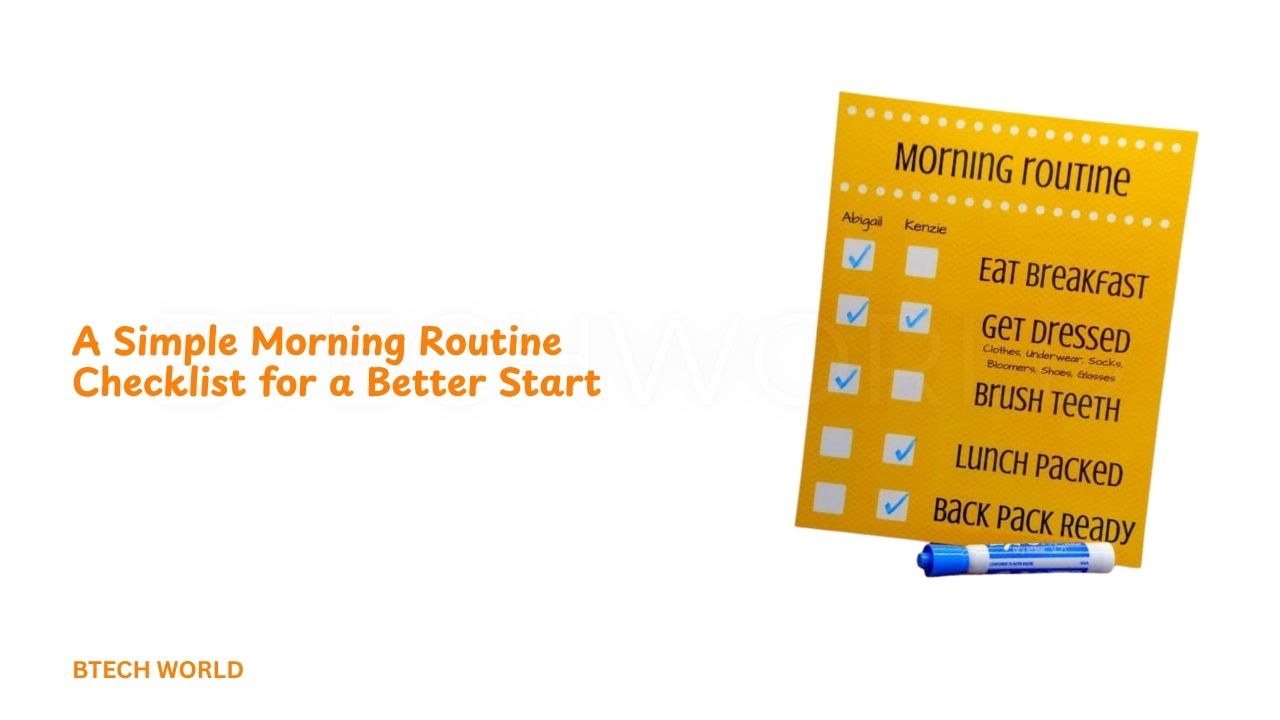
A Simple Morning Routine Checklist for a Better Start

A morning routine checklist can help you start the day with more structure, prepare for important tasks, and build healthy habits that fit your lifestyle. Instead of rushing through the morning or trying to complete too many activities, a simple checklist gives you a clear order for waking up, getting ready, eating, moving your body, and planning the day ahead. You do not need an expensive planner, complicated productivity system, or an extremely early alarm to create a useful routine.
The best morning routine is one you can follow consistently without sacrificing sleep or adding unnecessary stress. Students, professionals, parents, freelancers, and people working from home may all need different schedules, but the basic principles remain similar: prepare in advance, choose a few realistic habits, and focus on what matters most. This guide explains how to build a morning routine checklist, adapt it to your available time, and turn it into a sustainable part of everyday life.
What Is a Morning Routine Checklist?
A morning routine checklist is a list of small activities you want to complete after waking up. It may include making your bed, drinking water, washing your face, eating breakfast, checking your schedule, or spending a few minutes walking or stretching. Having these activities written down helps you remember what needs to be done without making every morning a series of last-minute decisions.
A checklist does not have to contain every possible healthy habit. Its purpose is to make your mornings easier, not to create another source of pressure. Some people need ten minutes to prepare for work, while others have an hour available for exercise, breakfast, reading, and planning. Choose activities that support your actual needs and adjust the list whenever your circumstances change.
Why a Morning Routine Can Be Helpful
A consistent morning routine can create a clearer transition between sleeping and beginning your daily responsibilities. When you know what to do first, you spend less time deciding whether to get dressed, prepare breakfast, or check your calendar. Keeping essential items in predictable places and completing repeated tasks in the same order can also reduce avoidable confusion during busy mornings.
A routine can support your productivity, but it does not guarantee success or eliminate stress. Your energy may change from day to day, and unexpected responsibilities can disrupt even a well-planned schedule. A flexible checklist helps you maintain a few useful habits when possible while allowing you to adapt when necessary. The goal is to create a dependable starting point rather than follow a perfect schedule every single day.
Your Daily Morning Routine Checklist
Use this basic checklist as a starting point. You can complete the activities in a different order depending on your schedule, personal preferences, and responsibilities.
- Wake up at a realistic, consistent time.
- Get out of bed and open the curtains.
- Drink water if you feel thirsty.
- Use the bathroom and complete your personal hygiene routine.
- Wash your face and brush your teeth.
- Make your bed or tidy your immediate surroundings.
- Get some natural daylight when practical.
- Stretch, walk, or do another suitable form of movement.
- Eat a balanced breakfast if it suits your needs.
- Review your calendar and important responsibilities.
- Identify your top three priorities for the day.
- Prepare your clothes, bag, meals, or work materials.
- Begin your first important task without unnecessary distractions.
You do not need to check every box every morning. Start with the activities that make the biggest difference to your day, then add others gradually. For example, someone with a short commute may have time for a walk, while a parent preparing children for school may need a much shorter checklist focused on essential tasks.
Step 1: Wake Up at a Consistent Time
Choose a wake-up time that works with your work schedule, school timetable, family responsibilities, and natural sleep needs. Waking at roughly the same time each day can help you establish a regular sleep-wake pattern. However, a consistent wake-up time is only useful when your bedtime allows you to get enough rest.
Adults generally need at least seven hours of sleep per night, although individual needs vary. The CDC recommends maintaining regular sleep and wake times and getting natural light earlier in the day as part of healthy sleep habits. (CDC) Therefore, avoid setting an unnecessarily early alarm simply because a social media routine recommends waking at 5 a.m.
Step 2: Get Out of Bed and Prepare Yourself
Once you wake up, give yourself a few minutes to become comfortable and alert. Sit up, get out of bed, open the curtains, and prepare for the day. You can make your bed if that helps your room feel organized, but it is an optional habit rather than a requirement for a productive morning.
Next, complete your normal personal hygiene routine. Brush your teeth, wash your face, shower if needed, and get dressed according to your schedule. Preparing these essentials before checking social media can help you avoid losing valuable time to notifications and unrelated content.
Step 3: Drink Water and Pay Attention to Hydration
After several hours of sleep, drinking a glass of water can be a simple way to respond to thirst and begin your day comfortably. Keeping a water bottle available may be helpful if you frequently forget to drink throughout the day. Your needs depend on factors such as activity, weather, diet, and personal health.
There is no requirement to drink a large amount of water immediately after waking, and water should not be presented as a special detox treatment. Your body already has systems for processing and removing waste. Aim for sensible hydration across the day rather than following extreme water-drinking challenges, especially if a healthcare professional has given you specific fluid instructions.
Step 4: Get Natural Morning Light
When practical, open the curtains or spend a short period outside after waking. Natural daylight provides a useful environmental signal for the body’s daily rhythm and can help reinforce the difference between daytime activity and nighttime rest. A morning walk is one possible way to combine daylight with movement, although you do not need to go outdoors if your circumstances make it difficult.
The CDC recommends getting natural light earlier in the day as one measure that can support healthy sleep habits. (CDC) You can make this step simple by sitting near a bright window while eating breakfast or walking outside before starting work. Never look directly at the sun, and consider heat, air quality, weather, and personal safety when planning outdoor activities.
Step 5: Add Gentle Movement or Exercise
Physical activity can fit into a morning routine in several ways. You might stretch, take a short walk, cycle, perform a beginner-friendly exercise session, or follow a simple mobility routine. Choose an activity that matches your fitness level and energy rather than copying a workout that is too demanding for you.
The World Health Organization recommends that adults work toward at least 150 minutes of moderate-intensity aerobic activity each week, or an equivalent combination of moderate and vigorous activity, along with muscle-strengthening activities on two or more days per week. WHO This is a weekly target, not a requirement to complete a long workout every morning. Short periods of movement can be a useful starting point for people who are currently inactive.
Step 6: Eat a Balanced Breakfast When It Suits You
Breakfast is an opportunity to include useful nutrients in your daily eating pattern. Depending on your preferences and dietary requirements, options may include oats with milk and fruit, eggs with whole-grain toast, plain yogurt with fruit, or beans on toast. If you have little time in the morning, preparing ingredients the night before can make the process easier.
The NHS advises choosing a balanced eating pattern that includes a variety of foods and describes healthier breakfast options that can provide fibre and other nutrients. However, eating habits differ, and the best approach depends on individual needs. If you prefer breakfast later, focus on an overall balanced diet rather than forcing yourself into a specific meal schedule solely because it appears on a checklist.
Step 7: Avoid Starting the Day With Endless Scrolling
Checking messages and social media immediately after waking can sometimes distract you from tasks that matter more. A quick look at a notification can become a long browsing session, particularly when feeds automatically load more content. If this regularly causes you to rush, try delaying social media until after your essential morning tasks.
You do not need to avoid your phone completely. It may be necessary for work messages, family communication, maps, alarms, or calendar reminders. Instead, make the way you use it more intentional. Check important notifications first, silence nonessential alerts, and leave entertainment apps until you have completed the tasks that help you prepare for the day.
Step 8: Plan Your Top Three Priorities
Before beginning work or study, review your calendar, deadlines, and important responsibilities. Identify the three tasks that would make the day feel productive if completed. These priorities might include finishing a work assignment, attending an important appointment, preparing for an exam, or completing a household responsibility.
Keep the list realistic. If you have many smaller tasks, group similar activities together instead of writing an overwhelming list that you cannot reasonably finish. A morning plan should give you direction, not make you feel behind before the day has even started. Leave room for unexpected requests, breaks, travel, and tasks that require more time than expected.
Step 9: Prepare Your Workspace and Daily Essentials
A few minutes of preparation can prevent unnecessary searching later. Check that you have your keys, wallet, phone, charger, identification, and any other items needed for work or school. If you work from home, make sure your desk is reasonably tidy and the materials for your first task are ready.
Preparing in advance is especially useful when your mornings are busy. You can place your bag near the door, choose clothes the night before, prepare lunch, and charge devices before going to sleep. These habits move decisions out of the morning and reduce the number of small tasks competing for your attention.
Step 10: Choose a Positive but Realistic Starting Habit
Some people enjoy reading, journaling, prayer, meditation, or spending a few quiet minutes with their thoughts. Others prefer listening to music, enjoying breakfast with family, or reviewing a learning goal. A small personal habit can make your routine feel more meaningful instead of turning it into a list of chores.
There is no single morning activity that everyone must complete to be successful. Choose something that helps you feel prepared and fits your beliefs, interests, or responsibilities. Even five minutes can be enough to create a moment of calm before a busy day. If a habit starts feeling like an obligation that adds stress, simplify it or replace it with something more suitable.
Read Graph Database News: Latest Updates, Trends, and Industry Developments
Morning Routine Checklist for Different Schedules
The best checklist depends on how much time you have. Use these sample schedules as flexible starting points rather than strict rules.
| Available time | Suggested routine |
|---|---|
| 5–10 minutes | Wake up, use the bathroom, drink water if thirsty, get dressed, and check essential plans |
| 15–20 minutes | Complete hygiene, have a simple breakfast if desired, and review priorities |
| 30 minutes | Add daylight or a short walk, breakfast, and a quick task plan |
| 45–60 minutes | Include a workout or longer walk, breakfast, personal time, and preparation for work or study |
You can rearrange these activities according to your circumstances. For example, if exercising before breakfast feels uncomfortable, move exercise later. If you have children to prepare for school, make the routine simpler and prepare more items the previous evening. The useful schedule is the one that supports your real life rather than an idealized morning.
A Morning Routine for Students
Students can use a morning checklist to prepare for classes and reduce last-minute stress. Start with personal hygiene, breakfast or a suitable alternative, and a quick review of the day’s timetable. Check whether assignments, books, stationery, identification, a laptop, or other materials are needed before leaving home.
Before studying, choose one academic priority, such as reviewing difficult notes, completing a short practice quiz, or organizing an assignment. Avoid turning the morning into a second full study session if you are already short on sleep. Consistent rest, realistic planning, and preparation can make it easier to begin the day without rushing through essential tasks.
A Morning Routine for Work and Productivity
Professionals may benefit from a checklist focused on preparation and prioritization. Review the calendar, identify meetings, check genuinely urgent messages, and prepare the materials needed for the first important task. If you work remotely, establish a clear transition between personal time and work by getting dressed, organizing your workspace, and deciding when you will begin.
Try not to fill the entire morning with small administrative tasks. Email and messaging can expand to consume all available time unless you set boundaries. When possible, protect a short period for focused work on a meaningful priority. Your precise routine may change on meeting-heavy days, but having a standard starting process can help you regain direction when your schedule becomes unpredictable.
How to Make Your Morning Routine a Habit
Starting with too many new habits can make a routine difficult to maintain. Instead, choose two or three essentials and follow them for several days before adding anything else. For example, you might focus first on getting up at a consistent time, completing your hygiene routine, and checking your calendar. Once these activities feel easier, consider adding movement, reading, or a more detailed plan.
It can also help to connect a new habit to an existing one. After brushing your teeth, you might prepare your daily task list. After making coffee or tea, you could review your calendar. Keep the checklist visible, track progress without demanding perfection, and adjust activities that repeatedly cause problems. Missing a day does not mean the routine has failed; simply return to the habits that remain useful.
Explore Confusion Matrix Python Tutorial: Metrics, Visualization, and Examples
Common Morning Routine Mistakes to Avoid
One mistake is copying someone else’s schedule without considering sleep needs or daily responsibilities. Waking very early can be counterproductive when it means regularly getting too little sleep. Another mistake is designing an unrealistic checklist with exercise, reading, extensive journaling, meal preparation, and several productivity tasks when only a short amount of time is available.
It is also easy to focus on appearance rather than usefulness. A routine does not need an elaborate planner, special products, or a long sequence of wellness activities. Avoid treating individual habits as guaranteed solutions for productivity, weight management, or mental well-being. A simple process that helps you get ready, eat appropriately, and begin your responsibilities calmly can be more practical than a complicated routine you cannot sustain.
Final Thoughts
A morning routine checklist can make the start of your day more organized without requiring a complicated schedule. Begin with essential activities such as waking at a realistic time, completing personal hygiene, preparing for the day, and identifying your main priorities. If time allows, add movement, daylight, breakfast, reading, or another habit that supports your personal goals.
The key is consistency without perfectionism. You do not need to complete every activity each morning or copy a routine designed for someone else. Build a checklist around your sleep, responsibilities, preferences, and available time. By preparing in advance and choosing a few useful habits, you can create a morning routine that feels manageable and supports a more organized start to the day.
Frequently Asked Questions
What should be included in a morning routine checklist?
Common items include waking up at a consistent time, personal hygiene, drinking water if thirsty, getting daylight, moving your body, eating breakfast if appropriate, reviewing daily priorities, and preparing essential items. Select habits that meet your actual needs.
What is the best morning routine for beginners?
Start with three simple habits: get up at a realistic time, complete your personal hygiene routine, and review your most important task for the day. Add other activities gradually once your initial routine feels manageable.
How long should a morning routine take?
There is no universal ideal length. A useful routine may take five to ten minutes or nearly an hour, depending on your responsibilities. The important point is to include what you need without sacrificing sleep or making the morning stressful.
Should I wake up at 5 a.m. every day?
No. Waking at 5 a.m. is not necessary for everyone. Choose a schedule that allows you enough sleep and fits your work, school, and family commitments. Consistency matters more than following a particular fashionable wake-up time.
Is exercise necessary every morning?
No. Daily morning exercise is not a requirement for everyone. You can spread physical activity throughout the week and choose activities that suit your fitness and health needs. The WHO’s adult recommendations focus on total weekly activity, not a mandatory morning workout.
What if I do not have time for breakfast?
Choose an approach that suits your needs and schedule. You could prepare something in advance, select a quick breakfast, or eat later if that works for you. Consider your overall diet and any personal medical or dietary requirements rather than following a rigid schedule.
How can I stop using my phone first thing in the morning?
Keep your phone away from the bed if practical, disable nonessential notifications, and complete one or two essential tasks before opening social media. You can still use your phone for an alarm, calendar, or important family communication.
How do I stay consistent with a morning checklist?
Keep the list short, prepare items the night before, and focus on habits that provide a genuine benefit. Review the checklist periodically and remove steps that are unnecessarily difficult or irrelevant to your life.
Explore More BTECH WORLD