What Is Run Cool Math Games? A Beginner’s Guide

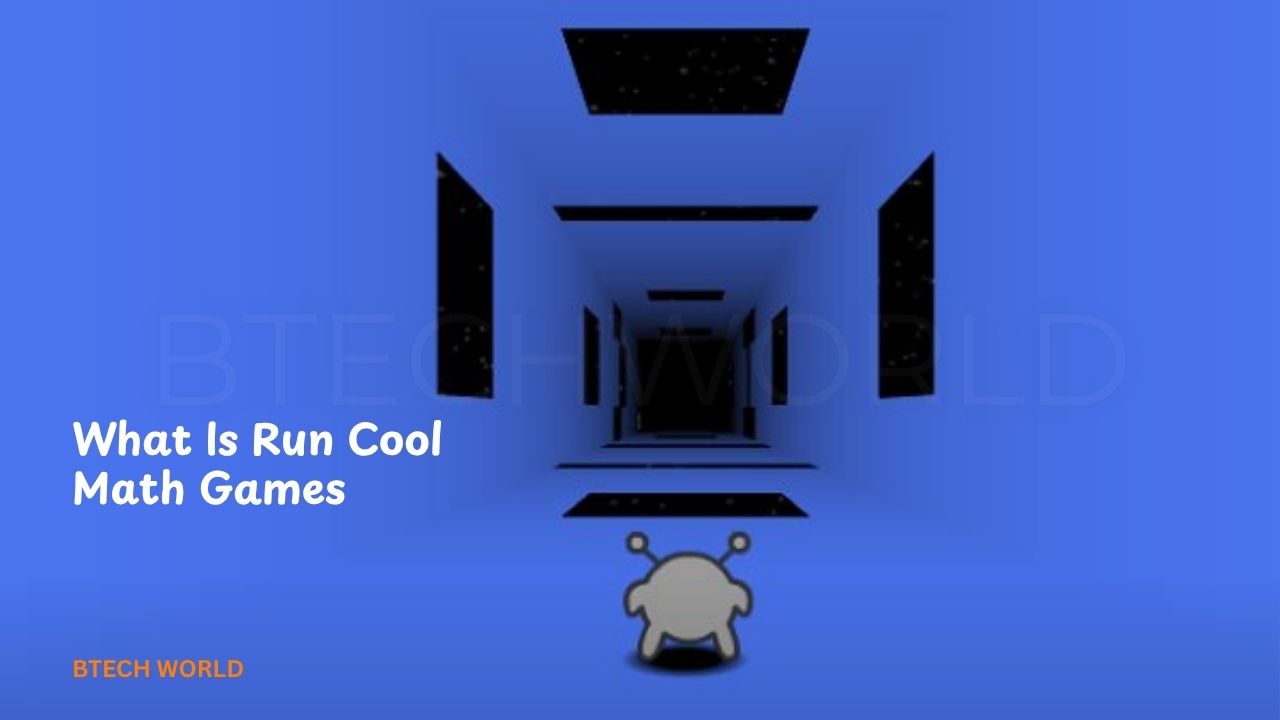
Run Cool Math Games usually refers to the popular Run series available on Coolmath Games, especially the original Run platformer. The game places players in a fast-moving 3D course set in space, where they must run, jump, change walls, and avoid gaps. Unlike traditional math games, Run is primarily a skill-based platformer. It focuses on timing, reaction speed, spatial awareness, and learning from mistakes rather than solving mathematical equations.
The Run series has become one of the recognizable game collections on Coolmath Games. The original Run offers a simple concept but becomes increasingly challenging as players progress. The platform currently lists Run, Run 2, and Run 3 as part of the series, although availability can vary between individual titles. For beginners, understanding the controls and the unusual wall-running mechanic is the best way to start enjoying the game.
Key Takeaways
- Run is a fast-paced 3D platformer available through Coolmath Games.
- Players run through space, jump across gaps, and switch between walls.
- The original Run contains 50 increasingly difficult levels.
- Run 2 and Run 3 expand the series with different gameplay elements.
- Success depends heavily on timing, observation, practice, and quick reactions.
What Is Run Cool Math Games?
Run is a skill-based platform game that takes place inside a futuristic space environment. Players control an alien-like runner traveling through a three-dimensional tunnel filled with gaps and obstacles. Instead of following a traditional flat platform, the character can move around different surfaces of the tunnel. This unusual design means players need to think about direction and position while moving at speed.
The basic objective is to reach the end of each level without falling into space. Players can run across surfaces, jump over gaps, and change the wall they are running on. The controls are simple enough for beginners to understand quickly, but the levels become more demanding as the game progresses. This combination of easy controls and increasingly difficult challenges is a major part of Run’s appeal.
How Does Run Work?
The original Run uses straightforward keyboard controls. Players can use the arrow keys or WASD to move through the course, making it relatively easy to begin playing. Jumping and changing direction require careful timing, particularly when a section of the tunnel contains missing platforms. The character continues moving through the course, so players need to react to upcoming obstacles rather than waiting for the perfect moment to plan every action.
One of the game’s most important mechanics is wall switching. When the character moves toward a different surface and makes contact with it, the running direction can shift to that wall. This allows players to avoid holes and continue through sections that might otherwise appear impossible. Learning when to change walls is often more important than simply moving quickly.
What Makes Run Different?
Run stands out because of its three-dimensional tunnel design. Many platform games keep players moving across a horizontal or vertical screen, but Run allows the character to travel around the inside of a tunnel. This creates a different type of spatial challenge. A path that looks dangerous from one angle may become much easier when the player switches to another wall.
The game also combines platforming with puzzle-like route planning. Players need to decide whether to stay on the current surface, move to another wall, or jump across a gap. As levels become more complicated, memorizing routes can become useful. This means Run tests more than reaction speed; it also rewards observation, concentration, and the ability to learn from previous attempts.
How Many Levels Are in Run?
The original Run contains 50 levels, according to Coolmath Games. The early stages introduce the basic movement system and give players time to understand how the tunnel works. Later levels become more demanding and require better timing and concentration. The increasing difficulty gives players a clear sense of progression without requiring a complicated character-upgrade system.
Completing all 50 levels requires patience because mistakes are part of the experience. Players will frequently fall from the course while learning a new section. Instead of treating each failure as wasted progress, beginners can use it to identify where their timing or route selection went wrong. Repeating difficult sections gradually helps build familiarity with the course and improves overall performance.
What Are Run 2 and Run 3?
Run 2 is another entry in the series and expands the concept with additional gameplay elements. Coolmath Games describes it as a three-dimensional course where players can run or skate, switch gravity by moving into walls, and collect special orbs. It includes different playable characters and additional levels, giving experienced players more variety than the original game.
Run 3 continues the series with another space-based adventure and introduces a larger collection of levels and characters. The Run series page describes Run 3 as a game where players run, skate, and jump through a new galaxy. While the games share the same basic idea of fast platforming in space, each entry adds its own mechanics and challenges.
How Do You Play Run?
To begin, players need to focus on movement rather than speed. The character automatically moves through the course, so the main task is controlling direction and responding to gaps. Beginners should watch the path ahead and avoid making unnecessary movements. When a wall change is required, moving toward the correct surface can keep the character safely inside the tunnel.
Jumping should also be used carefully. A jump made too early or too late can send the character into a gap. It is often helpful to observe a difficult section before trying to move through it quickly. Once the route becomes familiar, players can improve their timing and complete the same section with fewer mistakes.
What Skills Does Run Require?
Run requires several practical gaming skills. Timing is particularly important because platforms and gaps can appear quickly. Players also need visual-spatial awareness to understand how the tunnel is arranged and where the character will land after moving or jumping. Quick reactions can help when the course suddenly changes, but careful observation is equally important for difficult levels.
Adaptability is another useful skill. A route that works on one attempt may fail if the player’s timing is slightly different. Instead of repeating the exact same mistake, successful players adjust their approach. This makes Run a useful example of a game where improvement comes through experimentation, observation, and repeated practice.
What Makes Run Challenging?
The biggest challenge is that the levels become progressively harder. Early sections give players a chance to understand the mechanics, while later courses require more precise movement. Missing a jump or selecting the wrong wall can cause the character to fall, forcing the player to try the section again. This creates a trial-and-error gameplay loop.
Another challenge is concentration. Players need to look ahead instead of focusing only on the platform directly in front of them. A safe-looking path can quickly lead to a gap or an awkward wall transition. Learning to anticipate what comes next makes the game easier and can reduce unnecessary mistakes during difficult sections.
Tips for Beginners
The first useful tip is to look farther ahead. Instead of concentrating only on the next jump, try to notice the shape of the course beyond it. This can help you choose the correct wall before reaching a difficult section. Beginners should also avoid rushing simply because the character is moving quickly. Controlled movement is generally more useful than making random jumps or wall changes.
Another effective strategy is to learn from every failed attempt. If you fall at the same point repeatedly, identify what caused the mistake. You may have jumped too early, moved toward the wrong wall, or failed to recognize the correct route. Coolmath Games itself recommends learning from mistakes as an important way to improve at Run.
Can You Change the Game Speed?
The original Run includes a speed setting that allows players to increase the intensity. A faster setting can make familiar levels more challenging because there is less time to react to upcoming obstacles. However, beginners do not need to use this option immediately. Learning the standard movement system should come first.
A practical approach is to complete the levels at the normal speed before increasing the challenge. Once the controls and routes feel comfortable, the faster setting can provide an additional test. It is best viewed as an optional challenge rather than something required to complete the game.
Is Run Still Popular on Coolmath Games?
Run has remained one of Coolmath Games’ recognizable skill games for many years. The platform describes the series as one of its popular game collections, and the original Run page shows a large number of player ratings. Its simple controls, unusual wall-running system, and progressively harder levels help explain why it has remained visible on the platform.
The broader Run series also helps maintain interest because players can move from one game to another after learning the core mechanics. Run 2 introduces additional gameplay elements, while Run 3 expands the experience with new characters and levels. This gives players several ways to explore the same general style of space platforming.
Conclusion
Run Cool Math Games refers primarily to the Run platformer series available through Coolmath Games. The original Run combines fast movement, jumping, wall switching, and route planning inside a three-dimensional space tunnel. Although its controls are easy to learn, the increasing difficulty makes the game challenging enough to reward practice. Players who enjoy skill-based platformers can gradually improve by learning the course and adjusting their timing.
For beginners, the best approach is to focus on understanding movement before worrying about speed. Look ahead, use wall changes carefully, learn from failed attempts, and practice difficult sections repeatedly. Run is not a traditional math game, but it fits well within Coolmath Games’ broader collection of browser-based skill and puzzle experiences. Its simple concept and unusual mechanics make it an accessible starting point for new players.
Frequently Asked Questions
What is Run Cool Math Games?
Run is a 3D skill-based platformer available on Coolmath Games where players run through space and avoid obstacles.
Is Run a math game?
No, Run is primarily a platformer and skill game rather than a game based on solving math problems.
How many levels does the original Run have?
The original Run has 50 levels that become progressively more challenging.
What controls are used in Run?
Players can use the arrow keys or WASD to control movement.
Can you change walls in Run?
Yes, the game’s main mechanic allows the character to move onto different walls inside the tunnel.
Is Run 2 available on Coolmath Games?
Coolmath Games currently lists Run 2 and states that it is playable without requiring the old Flash system.
Is Run 3 part of the Run series?
Yes, Run 3 is the third major entry in the Run series and adds new levels, characters, and gameplay features.
How can beginners get better at Run?
Practice difficult sections, look ahead, learn from mistakes, and focus on accurate timing rather than rushing.
Explore more BTech World